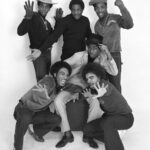
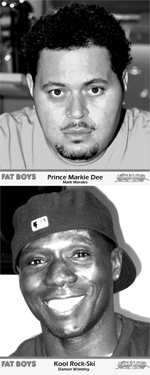
The Fat Boys are often filed under comedy and 1980s pop-culture nostalgia. That shorthand misses the more useful story: Prince Markie Dee, Darren “Buff Love” Robinson—the Human Beat Box—and Kool Rock-Ski built a rap group whose rhythm, character and stage chemistry could travel across albums, arena tours and movies. The Fat Boys beatboxing story is therefore a story about arrangement and reach, not a novelty footnote.
The Smithsonian’s National Museum of African American History and Culture describes their 1984 self-titled debut as widely considered the first hip-hop album to feature beatboxing. That does not make the group the sole origin of the technique. It does show why their visibility mattered: vocal percussion was not an interlude around the act. It was one of the act’s main instruments.
How Fat Boys beatboxing worked inside the arrangement
Buff Love’s vocal percussion supplied kick, snare, fills and comic punctuation without external hardware. Prince Markie Dee and Kool Rock-Ski could rap around those patterns, answer them or leave space for them. The result was not simply three MCs taking turns; the voices had different jobs.
That distinction matters in early hip-hop history. DJs had already turned records into instruments, while drum machines and live routines were reshaping how groups organized rhythm. The Human Beat Box made the body itself another piece of the setup. On record and onstage, audiences could hear a machine-like groove and see that it was being produced in real time.
Shopping links may support PCMusicMax at no extra cost to you.
Build a vocal-production setup: browse Home Studio Gear at GearReady.
The trio format turned contrast into identity
The members were not interchangeable. Buff Love’s percussion, Prince Markie Dee’s delivery and Kool Rock-Ski’s verses created a call-and-response structure that could shift from technical display to broad entertainment without losing the beat.
That range explains part of the group’s crossover power. A listener did not need to know the mechanics of beatboxing to understand the surprise of hearing a full rhythm section come from one performer. At the same time, people who cared about technique could focus on breath control, timing and the way a vocal pattern supported two other rappers.
The Fresh Fest era shows their scale
The Smithsonian’s Hip-Hop (R)Evolutions archive places the Fat Boys at the top of a June 24, 1987 Fresh Fest IV bill with Heavy D & the Boyz and Salt-N-Pepa. That billing is useful evidence of scale: by then the trio was operating inside the national touring infrastructure that helped move New York rap beyond local clubs and regional radio.
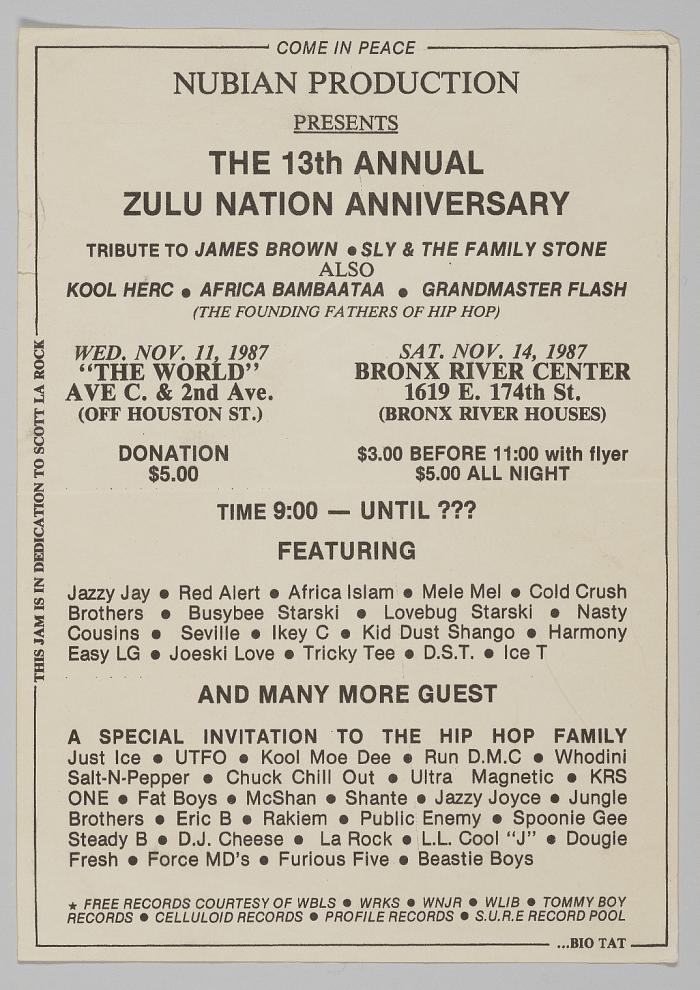
Period flyers also reveal how densely connected that live scene was. A public-domain 1987 Zulu Nation anniversary flyer in the source list places the Fat Boys among a wide hip-hop community. It is not a Fresh Fest advertisement; it is a separate artifact showing the group’s place among contemporary artists and crews.
Comedy was a strategy, not proof of lesser musicianship
The group’s humor made them approachable at a time when mainstream film and television were still learning how to frame rap performers. Their size, food jokes and physical comedy became recurring parts of the image. Those choices helped audiences remember the personalities, but they can also obscure the musical construction underneath.
A better reading holds both ideas at once. The Fat Boys used comedy deliberately, and the comedy worked because the trio already had strong rhythmic identities. Their routines could move from a punch line back into a beatbox break or group verse without feeling like a different act had arrived.
Movies extended the group beyond the record store
The 1987 comedy Disorderlies made that personality central. The American Film Institute catalog identifies it as the Fat Boys’ first starring role and notes that screenwriters Mark Feldberg and Mitchell Klebanoff toured with the group so the script could be tailored to their offstage personalities.
That production history is more revealing than a generic claim that “rappers became actors.” The film was designed around the trio as a recognizable unit. Records created the audience; touring strengthened the performance chemistry; film converted that chemistry into characters who could carry a feature-length story.
The model would become familiar across hip-hop: music establishes a public identity, then screen work, touring and other media expand it. The Fat Boys were working that blueprint while the commercial language around rap stardom was still being invented.
“Hardcore Reggae” shows a wider musical curiosity
GRAMMY’s history of reggae and hip-hop fusion identifies the Fat Boys’ 1985 “Hardcore Reggae” as one of the early meetings of the two styles. The song appeared on The Fat Boys Are Back and reached No. 52 on Billboard’s R&B/Hip-Hop chart, according to GRAMMY.
The track matters because it complicates the idea that the catalog consisted only of beatbox showcases and comedy records. Buff Love draws on dancehall-style toasting over a reggae rhythm, while the group treats the crossover with affection rather than as a detachable novelty. It is one example of how their vocal toolkit could adapt to a different rhythmic tradition.
What the crossover blueprint actually contained
- A recognizable musical device: beatboxing was easy to identify but deep enough to reward close listening.
- Distinct group roles: the trio could build routines around contrast rather than three similar verses.
- Live scale: national touring put those routines in front of audiences beyond the group’s home market.
- Personality: humor gave television and film a readable version of the act without replacing the music.
- Format flexibility: a song such as “Hardcore Reggae” showed that the vocal approach could move into another groove.
None of those elements alone explains the group. Together they show why the Fat Boys belong in more than a nostalgia reel. Their career demonstrated how a rap act could turn a specific sonic identity into a wider entertainment presence.
How to revisit the Fat Boys with fresh ears
- Start with the 1984 debut and listen for where beatboxing carries the arrangement rather than decorates it.
- Compare verses with group routines to hear how the three roles create momentum.
- Use Fresh Fest material to understand how the act was built for large live rooms.
- Watch Disorderlies as an extension of the trio’s public chemistry, not as a substitute for the records.
- Play “Hardcore Reggae” next to the better-known comic material to hear the group’s stylistic range.
Why the Fat Boys still matter
Beatboxing has several foundational figures, scenes and technical lineages; the history should not be collapsed into a single inventor. The Fat Boys’ particular contribution was scale. They placed the Human Beat Box inside a successful group format that could survive the jump from record to tour to screen.
That is the lasting blueprint. A musical technique became a character, the characters became a group identity, and the identity became portable across media. Remembering only the jokes leaves out the engineering that made the jokes travel.