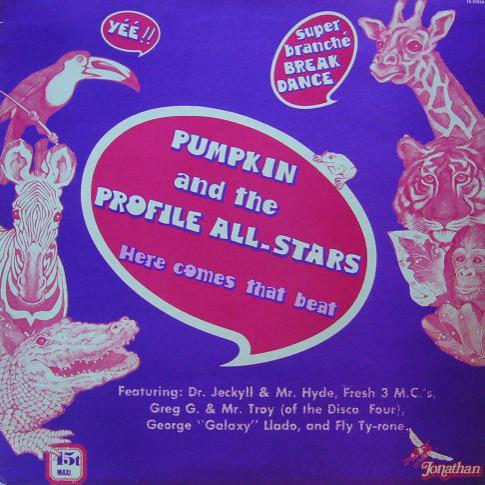
Errol Eduardo Bedward, better known as Pumpkin, deserves a place in the story of recorded hip-hop as a working musician rather than an anonymous name in a production database. He could play drums, build arrangements and program the rhythm instruments that were beginning to change studio practice. That breadth was valuable when rappers moved from live party routines into commercial recordings that needed reliable, repeatable grooves. The work connecting independent labels such as Enjoy, Profile and Tuff City is best understood as a network of sessions rather than one blockbuster album. Following the records across those labels shows why a musician can shape an era even when most listeners do not recognize his name.
The most illuminating testimony comes from musicians who actually knew his approach. Living Colour drummer Will Calhoun recalled Bedward building hip-hop-style grooves with drum kit elements and embracing electronic rhythm tools during the music’s formative period. Such recollections describe a musician responding to changing technology, not simply a programmer entering preset beats. They also remind us that recording credits from this era can be incomplete, inconsistent or scattered under alternate names. A responsible account should combine firsthand testimony, label-issued material and careful listening instead of treating any one website’s list as a perfect discography.
Pumpkin came to rap as a musician, not only as a beat programmer
Pumpkin’s earliest advantage was practical musicianship: a drummer’s understanding of how kick, snare and hi-hat form a repeating pocket. That knowledge translates directly into making a groove for a rapper, whether the percussion comes from acoustic drums or a machine. A drummer knows how a tiny change in spacing can make the same pattern feel more urgent or relaxed. Bedward was therefore equipped to work across studio setups that blended live players with emerging electronic instruments. Calling him merely a drum-machine operator would erase the musical judgment that such sessions required.
This is worth testing against the records rather than accepting it only as a biographical claim. Follow the kick and snare for a verse, then focus on hi-hat openings and smaller percussion accents. Listen for repetition that sounds deliberately stable and for accents that appear to respond to the rapper’s phrasing. Those patterns can reveal a producer’s musical priorities, although they do not prove which specific musician played an uncredited part. When attribution is uncertain, the most accurate description is what the recording contains, followed by a sourced explanation of who is documented as contributing.
Enjoy Records made him part of the first studio-rap infrastructure
Enjoy Records was among the independent labels documenting rap performances at a time when the commercial model for the genre was still developing. Early sessions often needed a backing track that could preserve the excitement of a live MC performance without depending on an entire party sound system. Pumpkin’s instrumental skills were well suited to that problem, because he could help turn an extended routine into a record with a consistent groove. The session players, arrangers and producers supporting these records were essential to the resulting sound even when the rapper received most of the publicity. Studying those contributors shows how recorded hip-hop grew out of overlapping live-musician and DJ traditions.
The transition was not a simple replacement of live musicians with drum machines on one particular date. Some recordings relied heavily on bands, while others used programmed rhythms or a mixture of the two. Labels also had different budgets, studios and groups of musicians available for their sessions. A credible history should identify the format and personnel of each record before declaring it an example of a specific technological change. The useful question is how the available musicians and machines made a recorded performance possible, not which single device supposedly created an entire genre.
“Love Rap” is a useful example of the live-band connection
Spoonie Gee’s “Love Rap” is a particularly useful listening document because it makes the link between rhythmic musicianship and early commercial rap audible. Tuff City’s retrospective material specifically describes Pumpkin’s “disco-skip” drum performance on the recording. The groove has a physical, repeating foundation that allows the rapper’s lines to stretch out without losing their dance feel. It reminds listeners that early rap production frequently involved a carefully arranged rhythm section rather than only a DJ looping a record. The drummer’s role was to keep that long musical conversation engaging, even when most of the public focus stayed on the MC.
Play the original label-issued recording and concentrate on the small accents between the main snare hits. Then compare that pattern with a later rap record built around an obviously repeated sample or fully programmed drum sequence. The comparison is not a contest in which one kind of rhythm is automatically better. It is a way to hear how different methods of keeping time shape the rapper’s performance. When a contemporary release credit names the drummer, that credit should accompany the listening analysis so the artist behind the groove does not disappear again.
Shopping links may support PCMusicMax at no extra cost to you.
Explore modern creator gear: browse Home Studio Gear at GearReady.
Drum machines expanded the palette rather than erasing the drummer
Rhythm machines gave producers the ability to repeat a specific pattern with precise timing and to edit the arrangement without replaying an entire live take. That capability could appeal to a trained drummer precisely because the instrument was programmable. Pumpkin’s associates remembered his interest in emerging beatmaking technology rather than describing him as someone displaced by it. The machine could provide consistency, while the musician still made decisions about accents, feel and when a section should change. It is misleading to describe this era as if human rhythm suddenly vanished when the first drum machine entered a studio.
The important distinction is between operating a tool and arranging a musical performance. A programmed kick and snare can sound stiff if nothing in the surrounding pattern creates movement. Small changes in hi-hat placement, fills or the relationship between percussion and bass can create a more animated result. Those choices reflect rhythm knowledge regardless of whether the sounds are acoustic or electronic. Looking at Bedward through this perspective gives present-day producers a practical example of how musicianship can survive and evolve through technical change.
“King of the Beat” puts the behind-the-scenes musician out front
“King of the Beat” gave Pumpkin a chance to place his rhythmic identity on the label instead of appearing mainly in somebody else’s credits. The original early-1980s single is documented through rights-holder-distributed versions, including the RCA catalog listing. The title captures his reputation as a musician whose main public contribution was the arrangement and force of a beat. Listening to that track helps a reader understand the artist directly instead of reconstructing his style entirely from other performers’ albums. It is also a useful reminder to distinguish the original studio version from later DJ edits or unofficial remixes.
An artist’s own release can clarify a production approach, but it does not automatically establish every contribution made elsewhere. Compare its percussion tone and repeating phrases with recordings on which Bedward has a documented role. Pay attention to the spaces between phrases, not only the loudest snare hit or most recognizable break. If an apparent similarity appears, verify the credits before calling it the same player or a direct reuse of a particular session. That method avoids turning a fascinating production history into a chain of speculative identifications.
Why aliases and incomplete credits complicate the catalog
Pumpkin’s catalog is difficult to reconstruct because some recordings were issued on small labels, some roles were underdocumented and some credits used aliases. Specialist discographies document names including B. Eats, Bedward and Jack-O-Lantern in connection with his work. Those listings are important leads, but each record should still be checked against label scans, release databases or trustworthy firsthand testimony. A list that duplicates aliases as separate people would make the production network look larger than it actually was. Conversely, searching only for the word “Pumpkin” can make real work disappear from the visible record.
A practical audit starts with a particular single rather than a broad claim about an entire artist’s catalog. Write down the label, catalog number, issue year, credited producer, credited performers and any known alternative pressing. Compare the information across independent sources and note whenever the packaging omits a specific role. An alias should be merged into the same musician only when the evidence really connects the names. This disciplined process is slower than copying an internet discography, but it is the foundation of dependable producer-history journalism.
How to study Pumpkin’s contribution
Start with the original “King of the Beat” recording, then listen to “Love Rap” for the different job a drummer can perform beneath an MC. In one track the producer’s identity is prominent, while in the other the rhythm serves a featured rapper. Listen for the consistency of the rhythmic foundation, the way accents are placed and how a long verse gains or loses energy. Then move to other releases with verified Bedward credits and compare the sonic relationships cautiously. The goal is to learn how the same musician can adapt to different recording situations without assuming every track uses the same instruments.
For an additional research pass, open the labels’ original single pages and compare the published credits with specialized archival discographies. Use the date and catalog number to avoid confusing a reissue with a first pressing. If a later release provides new liner notes, identify those notes as retrospective evidence rather than replacing the earlier document silently. Separate what is audible on the recording from what the surviving paperwork proves. That distinction gives producers, collectors and hip-hop historians a shared set of facts they can examine independently.
- Start with records from Enjoy and Tuff City that list him as musician, arranger or producer.
- Listen for the transition between live rhythm sections and programmed drums.
- Track aliases rather than assuming every credit uses “Pumpkin.”
- Compare his work with Spoonie Gee, Treacherous Three and Grandmaster Caz.
- Separate documented credits from later oral-history claims about broader influence.
Continue exploring
The related Spoonie Gee and Treacherous Three recordings offer a natural continuation of this story because they belong to the same early independent-label ecosystem. Studying those artists together helps readers connect a musician’s behind-the-scenes labor with the performers who became visible to the public. The link to the Treacherous Three is especially useful for distinguishing the live MC tradition from the recorded arrangement supporting it. PCMusicMax’s Treacherous Three history explores that group and its technical vocal style. Readers interested in documentation can also use our producer-credit research guide to follow musicians across releases.
A strong internal link should answer the next question raised by the current article, not simply direct readers to anything with “hip-hop” in the title. Here the questions are how early rap groups recorded, how labels staffed their sessions and which credits can be independently verified. A broader technology article may explain drum machines but cannot replace primary sources about this particular musician. Likewise, a producer biography should not be mistaken for a comprehensive discography unless the evidence genuinely covers one. Keeping those distinctions makes the network of articles more useful to readers and less prone to repeating the same thin summary in several places.
Sources and research notes
This article relies on specialist discography research, record-label documentation and participant recollections rather than an invented first-person studio narrative. The Pumpkin catalog documented by HipHopBeBop is a useful map of tracks and aliases, with individual entries deserving cross-checks against labels. The original “King of the Beat” recording can be traced through the rights-holder-distributed catalog listing. The Tuff City historical releases are valuable because they return attention to the instrumentalists and sessions behind early rap hits. Together the materials support a careful picture of Bedward’s work, although they cannot account for every anonymous studio contribution made at the time.
Source evaluation is an important part of the story because later reissues and memories can disagree about credit wording or release dates. An original label is strong evidence of what was printed when the record circulated. A later interview may explain the musician’s role more fully but must be dated and attributed as testimony. A modern streaming listing is helpful for verifying that a recording exists, yet it should not be mistaken for a complete reproduction of the original session paperwork. Each different type of source answers a different question, and the article becomes stronger when those limits are made visible.