How Rakim changed rap flow is more specific than the usual claim that he made rap more complex. His influential recordings shifted rhyme placement inside the bar, treated pauses and breathing as compositional choices, and made a relaxed voice sound rhythmically intricate. The question worth asking is which recording demonstrates each technique—and what can listeners actually hear?
NPR’s 2023 hip-hop history feature focused on the shift created by Eric B. & Rakim’s 1987 album Paid in Full: more internal rhyme, less dependence on predictable end-rhyme placement and a cadence that could move through the beat rather than simply landing on top of it.
Before the mythology, listen to placement
Rakim’s technical importance is easiest to hear by ignoring reputation for a moment and following where syllables land. Earlier rap already contained sophisticated performers, but many mainstream rhyme patterns were easier to predict from bar to bar.
Rakim increased the sense that a rhyme could happen inside the line, across the line, or after a pause that made the listener wait for resolution.
Shopping links may support PCMusicMax at no extra cost to you.
Build a practical creator setup: explore Home Studio Gear at GearReady.
Internal rhyme changes the density of a verse
An end rhyme gives the listener a clear boundary. Internal rhyme adds connections inside that boundary. Once multiple syllables begin echoing across a bar, the verse can feel more tightly engineered without becoming faster.
This is one reason Rakim’s delivery can sound calm while the writing underneath is structurally busy. Complexity does not require shouting or rushing.
Cadence becomes a musical instrument
Rakim has connected his phrasing to his experience playing saxophone and listening to jazz musicians such as John Coltrane. In the NPR interview history, he described trying to write rhymes as if he were a saxophone player.
That analogy is useful because flow is more than rhyme words. It includes attack, pause, breath, syncopation and how the voice moves against the beat.
“My Melody” makes the technique easier to hear
Journalist Kiana Fitzgerald, speaking in NPR’s hip-hop anniversary coverage, pointed to “My Melody” as an example of Rakim placing rhymes in less conventional positions within the bar. You do not need to reproduce the lyrics to hear the effect.
Listen for where the voice pauses, where internal sounds answer one another and how the line continues after a place where an earlier MC might have ended the rhyme.
Explore recording hardware: browse computer recording equipment on Amazon.
“Paid in Full” shows control through restraint
The title track demonstrates another part of Rakim’s influence: authority without constant volume. The voice sits inside the rhythm with a controlled, conversational confidence.
That restraint matters because later rap technique often gets measured by speed or syllable count. Rakim’s legacy is also about placement and poise.
Technique is not the same as influence
Many later MCs have cited or reflected Rakim’s innovations, but PCMusicMax separates sourced influence from editorial resemblance. If a rapper uses internal rhyme, that does not automatically make the technique “from Rakim.”
The stronger claim is historical: Paid in Full became a widely recognized turning point in how complex rhyme placement and cadence could function in mainstream recorded rap.
Hear the evolution: “Follow the Leader” (1988) moves the comparison past the debut and into a denser, forward-driving performance. Listen for the sustained phrasing: short rhythmic accents accumulate even when Rakim delays a predictable line-ending.
Explore music-making tools: browse Amazon Best Sellers in Musical Instruments.
The Eric B. partnership matters
Flow does not exist in isolation from production. Eric B.’s DJ-centered sound and the record’s spacious rhythmic construction create room for Rakim’s phrasing to be heard clearly.
That is why rapper analysis should not strip the voice away from the beat. The relationship between MC and production is part of the technique.
Rakim’s recording chronology: every major album era, 1986–2026
Rakim’s history is larger than one 1987 LP. The table below separates his four studio albums with Eric B., five later solo albums, and a catalog-listed 2026 collaborative project. This is an original critical listening roadmap, not a claim that every guest appearance, remix or compilation has been enumerated. Releases after the classic duo period show how the technique changed with different beats and producers.
| Release era | Album / context | Representative listening test |
|---|---|---|
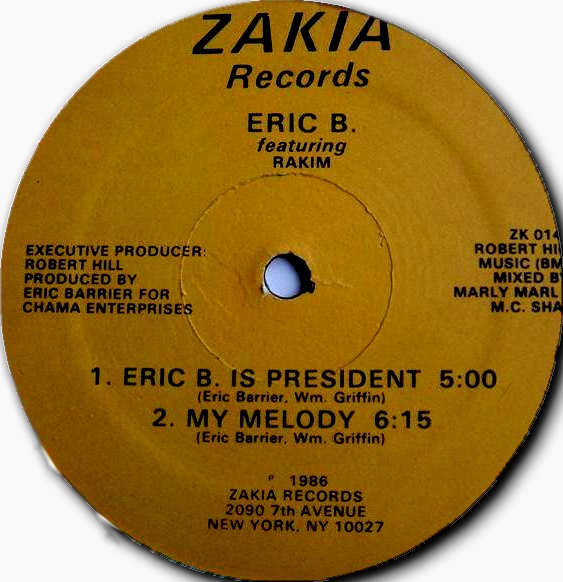
| 1986–87 | “Eric B. Is President” / “My Melody” single; Paid in Full (1987), Eric B. & Rakim | Internal rhyme and new phrase placement; authority without shouting |
| 1988 | Follow the Leader — Eric B. & Rakim | Extended rhyme chains and sustained, breath-controlled momentum |
| 1990 | Let the Rhythm Hit ‘Em — Eric B. & Rakim | Faster rhythmic interaction, storytelling and varied tempos |
| 1992 | Don’t Sweat the Technique — Eric B. & Rakim | Syncopation, groove-driven phrasing and denser arrangements |
| 1997 | The 18th Letter — Rakim solo | Solo re-entry; how the same vocal identity works with new producers |
| 1999 | The Master — Rakim solo | DJ Premier collaboration; precision over a different drum architecture |
| 2009 | The Seventh Seal — Rakim solo | Later-career thematic focus and adaptation to changing production |
| 2024 | G.O.D.’s Network (Reb7rth) — Rakim solo / production-led collaborative album | The veteran MC as producer and curator, alongside guest performers |
| 2025 | The RE-UP — Rakim solo release | Compare the contemporary vocal pocket with the 1980s recordings |
| 2026 | The Godbody LP — catalog-listed collaboration featuring Rakim, Kurupt and Masta Killa | Explore shared billing and contemporary MC combinations; distinguish catalog metadata from track-by-track credits |
Discography verification: AllMusic’s current Rakim biography and catalog, AllMusic album listings, the Apple Music artist catalog, and Apple Music’s 1990 album notes. Individual records may have single dates that precede their album dates. Later reissues are not original releases.
1987–1988: from Paid in Full to Follow the Leader
The earliest recordings establish a relaxed but architecturally busy voice. The 1988 album intensifies that approach: “Microphone Fiend,” “Lyrics of Fury” and the title track sustain the internal musical motion over longer passages. Compare the already embedded “My Melody,” “Paid in Full” and “Follow the Leader” examples before assuming all intricate flow must be fast. The sophistication is in where the accents land, not simply their number.
1990–1992: more rhythmic variation, storytelling and syncopation
Let the Rhythm Hit ‘Em moves between the urgent title track, “No Omega,” “In the Ghetto,” and the storytelling turn of “Mahogany.” Then the Don’t Sweat the Technique title track lets the vocal slip around prominent bass and drum accents. Listen for delayed resolution and breath control, and distinguish Rakim’s lyric delivery from production choices made across the sessions.
1997: The 18th Letter — Rakim defines his solo era
After the duo albums, “Guess Who’s Back” places Rakim inside a different production environment while preserving his measured vocal authority. This matters when evaluating influence: the identifiable style survives even when the record’s supporting musicians and beatmakers change.
1999: The Master — the DJ Premier test
“When I B on Tha Mic” places Rakim’s line placement against DJ Premier’s distinctive beat-making. A new producer changes the texture and spacing of a track, but Rakim’s understated emphasis and intricate chains remain recognizable. This is a better demonstration of an enduring personal technique than blanket statements that every later rapper copied him.
2009–2025: the later solo chapters and the return as producer
The Seventh Seal (2009) follows the long gap after his second solo album. The later G.O.D.’s Network (Reb7rth) (2024) is especially useful because Rakim took an unusually direct role behind the boards and brought together guests including Kurupt and Masta Killa. Their “Be Ill” performance contrasts three different vocal identities while giving listeners the familiar steady, rhythmic center of Rakim’s delivery.

The RE-UP (2025) belongs in the continuing solo catalog, and 2026 release listings identify a collaborative project with Kurupt and Masta Killa. These entries establish the broader timeline; this page does not invent unverified track credits or call recent work a new Eric B. & Rakim group album.
A non-lyrical guide to understanding rhyme placement
Illustrative model — not a transcription of Rakim’s lyrics: In a predictable bar, a rhyme might only return at the final beat. In a more elaborate phrase, a sound can repeat on an earlier subdivision, continue across the bar line, and return after a deliberate rest. The meaning still has to survive the technique.
| Listening dimension | Conventional expectation | Rakim’s expanded possibilities |
|---|---|---|
| Rhyme placement | Line ends in a rhyming word | Internal sounds also answer each other earlier |
| Cadence | Stress coincides with obvious drum beats | Voice can lead, lag or cross rhythmic accents |
| Breathing | Pause only at a line break | Breaths and rests shape tension within a phrase |
| Flow density | More syllables means faster delivery | Complex writing can coexist with a calm tempo |
How to study Rakim without copying lyrics
A practical ear-training exercise is to keep the drum pattern constant and mark the points where the voice supplies an accent, pause or internal rhyme. No transcription of copyrighted lyrics is required.
| Listen for | What to notice | Best starting track |
|---|---|---|
| Internal rhyme | Sounds recurring within a line rather than only at its ending | “My Melody” |
| Conversational control | Rests and unhurried words against an unchanged groove | “Paid in Full” |
| Extended phrasing | Ideas carried over expected bar boundaries | “Follow the Leader” |
- Mark where each phrase begins and ends.
- Listen for internal sound repetition.
- Notice pauses that create tension.
- Compare stressed syllables with drum hits.
- Separate rhyme density from vocal speed.
- Compare early Eric B. & Rakim records with later solo performances.
From technique article to battle article
This guide asks how Rakim’s flow works. The Rakim vs. Big Daddy Kane 10-song battle asks a different question: how two elite catalogs and performance styles compare across ten paired rounds.
Keeping those article types separate lets PCMusicMax preserve evidence in the history piece while keeping the battle explicitly editorial.
Frequently asked questions about Rakim’s flow
Did Rakim invent internal rhyming?
No. Internal rhyme existed in rap, poetry and other vocal forms before Rakim. His achievement was helping popularize a particularly fluid, sophisticated use of internal rhymes, pauses and jazz-like phrasing on influential mainstream recordings.
What recording best demonstrates Rakim’s unusual cadence?
Start with “My Melody” for less predictable rhyme placement, then compare the understated “Paid in Full” to the longer, more demanding phrases of “Follow the Leader.” The answer depends on which technical feature you are listening for.
Which albums are by Eric B. and Rakim, and which are Rakim solo?
The four duo studio albums are Paid in Full (1987), Follow the Leader (1988), Let the Rhythm Hit ‘Em (1990) and Don’t Sweat the Technique (1992). Rakim’s later solo and collaborative releases are listed separately in the chronology above.
Does playing jazz make someone rap like Rakim?
Not automatically. His saxophone background is a useful explanation of his rhythmic imagination, but great performance also requires writing, repetition, breath control, practice and personal artistic choices.
Are all the videos original music videos?
No. This article distinguishes official music videos, official-label audio, and later authorized uploads. Upload dates, original recording years and the existence of archival footage are different facts.
Sources and research notes
- NPR via Georgia Public Broadcasting — Eric B. & Rakim and the flow shift on Paid in Full
- Eric B. & Rakim — “Follow the Leader” music video for the 1988 follow-up album
- PCMusicMax — Rakim vs. Big Daddy Kane battle for playable catalog context
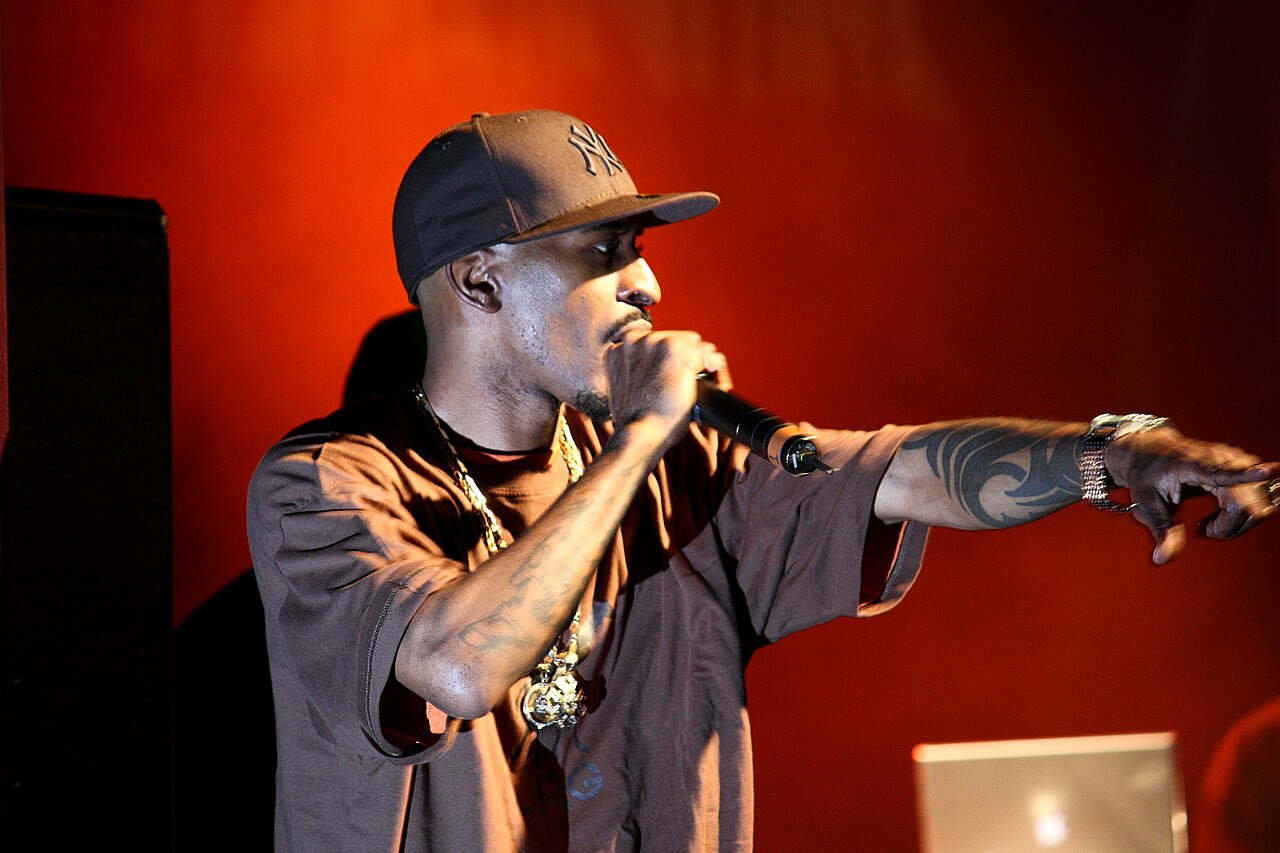
- Featured photograph — Rakim at Paid Dues, June 4, 2008; Flowizm / Wikimedia Commons, CC BY 2.0
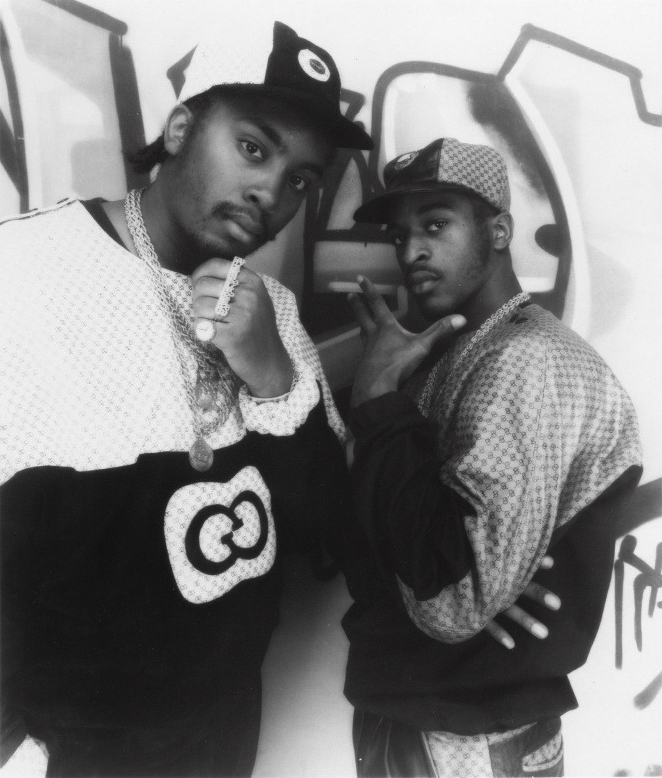
- 1987 Eric B. & Rakim press photograph — Waring Abbott / Island Records; Commons US public-domain determination based on 1978–1989 publication without notice
- 1986 Zakia Records “Eric B. Is President / My Melody” record label — Commons US public-domain determination
- 2023 Rakim performance photo — Freddie Everett, U.S. Department of State, public-domain U.S. federal-government photograph
- AllMusic — Rakim’s solo discography, 1997–2026
- Apple Music — The RE-UP (2025) release details