Disco, house and techno belong in the same conversation, but not in the same box. Disco established the modern club record and the DJ-led dance floor. Chicago house carried that function forward after disco’s commercial backlash, using edits, drum machines, synthesizers and small-studio production. Detroit techno emerged at nearly the same moment from a different local imagination: funk, electro, European electronic music, Detroit radio and a deliberate fascination with the future.
The connection is therefore a network, not a straight family tree. The same four-on-the-floor pulse or Roland drum machine can appear in all three styles, yet rhythm alone does not tell you who made the music, which room it served, or what artistic problem it was trying to solve. This guide separates the lineages without pretending they developed behind sealed borders.
The shortest useful distinction: disco is a broad 1970s dance-music culture built around records, clubs and extended grooves; house is Chicago’s machine-assisted continuation and reinvention of that dance-floor practice; Detroit techno uses some of the same tools but organizes them around electronic futurism, sequenced motion and a different city story.
What the three genre names actually describe
A genre name can describe sound, but it also names a community, a production economy and a listening situation. Treating disco, house and techno as three preset folders misses why the categories became useful. Disco was not merely strings over a kick drum. House was not simply “faster disco.” Techno was not house with fewer vocals. Each name accumulated meaning through particular clubs, radio programs, labels, producers and audiences.
| Lineage | Foundational setting | Core production idea | Best first listening question |
|---|---|---|---|
| Disco | 1970s clubs, especially Black, Latino and gay dance spaces | Sustain a communal dance floor through groove, arrangement and extended mixes | How does the arrangement keep dancers moving? |
| Chicago house | The Warehouse, Music Box and a local ecosystem of DJs, record stores and DIY producers | Rebuild disco, soul and electronic records with loops, edits, samples and machines | What has the producer repeated, stripped down or recontextualized? |
| Detroit techno | Detroit and Belleville artists shaped by funk, electro, radio and European electronics | Use sequencing and synthetic timbre to build motion, atmosphere and futurist identity | How do machines create a world rather than imitate a band? |
Disco made the record, the DJ and the room work as one system
Disco’s foundational achievement was not one instrument or tempo. It was the organization of recorded music around continuous social dancing. Producers lengthened grooves, engineers emphasized bass and percussion, labels issued extended mixes, and DJs sequenced records so that energy could develop across an entire night. The record was increasingly designed to interact with a sound system, another record and a crowd.
The Smithsonian’s disco-and-club ephemera archive describes the genre’s underground origins in Black and gay communities before its late-1970s mainstream dominance. That history changes how the music should be heard. Disco’s repetition was not a lack of ideas; it created a stable floor on which dancers, DJs and arrangements could generate change together. A string entrance, percussion break, bass variation or vocal return mattered because of the time spent inside the groove.
Commercial saturation later reduced disco to a costume in the popular imagination, and the backlash culminated symbolically in Chicago’s 1979 Disco Demolition Night. But clubs did not stop needing dance music when major labels retreated. The infrastructure, audience knowledge and DJ craft remained. House music developed inside that continuity.

Chicago house continued disco’s purpose while changing its production economy
The Recording Academy’s house timeline places Chicago at the genre’s center and identifies Frankie Knuckles, the Warehouse and the city’s Black and queer communities as foundational. Knuckles brought a disco-rich New York club vocabulary to Chicago, then used reel-to-reel edits and later drum machines to keep supplying dancers with material after the commercial disco pipeline narrowed.
That shift matters more than the slogan that house was “disco’s revenge.” A disco production might require a full rhythm section, singers, arrangers and orchestral players. House could be built by a small team—or one producer—with a drum machine, synthesizer, tape edit or sampler. The change did not remove musicianship. It moved composition into pattern programming, sound choice, sampling, arrangement and the timing of repetition.
Early house was not sonically uniform. Some records kept gospel-derived vocals and piano; others became spare, percussive or acidic. The shared center was functional: music made to work in a DJ’s set and to hold a floor. That is why vocal presence alone cannot identify the genre, and why a disco sample does not turn every track into disco.
Detroit techno used related tools to construct a different future
Detroit techno was created in conversation with dance music around it, but it should not be described as a Chicago branch. The Detroit Historical Society traces Juan Atkins’s development through funk, George Clinton, Kraftwerk, Detroit radio—especially the Electrifying Mojo—and his work with Derrick May and Kevin Saunderson, later grouped as the Belleville Three. Atkins’s Cybotron and Model 500 projects made electronic futurism central rather than incidental.
Where classic house often exposes its relationship to disco, soul or gospel, early Detroit techno frequently lets sequencing, synthetic timbre and machine precision become the drama. The emotional range is still wide: techno can be austere, euphoric, funky, melodic or ominous. The point is not that Detroit removed soul. It encoded feeling through a different vocabulary.
The city’s industrial image became part of techno mythology, but “machines sound like factories” is too simple. The more useful idea is that Detroit producers used consumer electronics to imagine mobility beyond the city’s constraints. Technology became a language for Black futurism, not a substitute for human expression.
Chicago and Detroit were connected, not interchangeable
The two cities are close enough for records, DJs and dancers to circulate. Chicago audiences heard Detroit productions. Detroit artists absorbed house and disco alongside funk, electro and European electronics. Kevin Saunderson’s Inner City demonstrated how porous the border could be, pairing Detroit production with vocal dance-pop reach.
That exchange explains why a record may be sold as house in one context and techno in another. Labels are negotiated by scenes as well as by sound. Geography, artist identity, label catalog, DJ placement and audience expectation all influence what a record is called.
Genre history therefore needs two statements at once: house and techno influenced each other, and each name preserves a distinct Black American origin story. Flattening them into “EDM” loses information. Building walls between them invents a purity that the musicians themselves rarely observed.

Listen for groove, arrangement and sound design—not stereotypes
A single kick pattern cannot settle a genre argument. Instead, listen across several layers. Start with the rhythm section, then ask how the arrangement changes, what kind of timbres carry the identity, and whether the record foregrounds a song, a loop or an evolving electronic environment.
| Element | Common disco tendency | Common house tendency | Common Detroit-techno tendency |
|---|---|---|---|
| Rhythm | Live or studio-played pulse with layered percussion | Programmed four-on-the-floor with swing, claps and looped accents | Sequenced pulse, syncopated electronics and machine articulation |
| Harmony and vocals | Song-centered vocals, strings, horns, keyboards and bass | Piano, organ, sampled chords, gospel/soul vocals or short vocal fragments | Synth motifs, pads, sequenced bass and often—but not always—instrumental focus |
| Arrangement | Extended song sections and orchestral rises | Loop-based entries, drops, filter movement and DJ-friendly transitions | Incremental pattern mutation, timbral development and spatial tension |
| Caution | Not every disco record uses an orchestra | House can be dark, minimal or futuristic | Techno can be soulful, melodic and influenced by house |
Drum machines are shared vocabulary, not genre passports
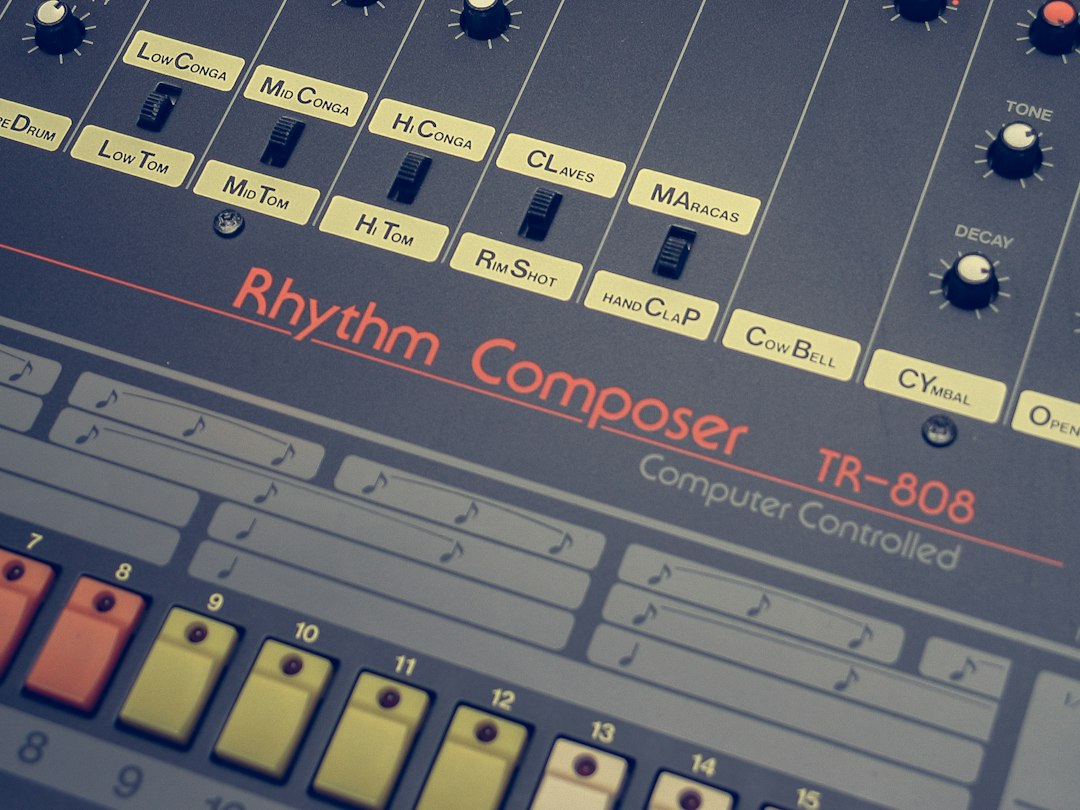
Roland’s history of the TR-909 documents how the machine became embedded in early Chicago house and Detroit techno. Its hard kick, crisp hats, claps and step-programming helped small studios build tracks with club impact. The TR-808, meanwhile, offered a deeper, more synthetic palette that became important across electro, hip-hop and electronic dance music.
But equipment does not compose a lineage by itself. The same machine can support a house piano track, a Detroit sequence, electro, pop or rap. Genre emerges from how the pattern is programmed, what surrounds it, where the record circulates and which community recognizes it as its own.
PCMusicMax may earn from qualifying purchases routed through approved links.
Building a compact production setup? Browse the GearReady home-studio collection, then choose tools for the workflow you actually use rather than chasing a machine only because it is historically famous.
A listening route that preserves the differences
Begin with two disco records that solve the dance-floor problem differently: Chic’s “Good Times” for live-band precision and Donna Summer’s “I Feel Love” for an electronic pulse that points forward. Then move to Chicago house through Jesse Saunders’s “On and On,” Frankie Knuckles and Jamie Principle’s “Your Love,” and Mr. Fingers’ “Can You Feel It.” Listen for what was retained from disco and what became possible through repetition and small-studio tools.
For Detroit, compare Cybotron’s “Clear,” Model 500’s “No UFO’s” and Rhythim Is Rhythim’s “Strings of Life.” The goal is not to decide which record sounds “most technological.” Hear how each uses machines to create identity: electro-funk tension, futurist minimalism or emotional expansion.
Finally, cross the categories deliberately. Put Inner City beside vocal house, or compare a soulful Detroit production with a deep-house record. When the border becomes uncertain, return to provenance: artist, city, label, club circulation and the language used by the scene at the time.
Three myths that make the history less useful
“House replaced disco”
House continued disco’s dance-floor function after the commercial industry abandoned the label, but disco never vanished. Its records, production techniques and communities remained active, and later artists repeatedly revived its live instrumentation and orchestral vocabulary.
“Techno is just harder house”
Intensity is not a genealogy. Techno has its own Detroit origin, radio environment, artist network and futurist vocabulary. Some techno is gentle or melodic; some house is abrasive. Hardness is a production choice, not a reliable family tree.
“The drum machine created the genre”
Machines expanded access and shaped aesthetics, but people created the scenes. Clubs, record stores, radio, labels, DJs, dancers and producers decided how the tools would be heard. A history made only of gear removes the communities that gave the sounds meaning.
Frequently asked questions
Did house music come directly from disco?
House grew from disco, post-disco, soul, funk and electronic records as Chicago DJs and producers rebuilt dance music with edits and machines. “Directly” is useful only if it does not erase the local clubs, Black and queer communities, and new production practices that made house a distinct genre.
Did techno come from house?
Detroit and Chicago influenced each other, but Detroit techno also drew strongly from funk, electro, Kraftwerk, local radio and futurist ideas. It is better understood as a neighboring development than as a simple house subgenre.
Why do house and techno both use four-on-the-floor beats?
A kick on every beat is effective for continuous dancing and easy for DJs to mix. The pattern is a foundation, not a complete definition. Swing, percussion, bass, harmony, sound design and arrangement distinguish individual records and scenes.
Is disco electronic music?
Disco spans live-band and electronic production. Some landmark records rely on orchestral players and rhythm sections; others foreground synthesizers and sequencers. The genre is better defined by its dance-floor culture and production function than by a single technology.
Can one track be both house and techno?
Yes. Producers have crossed the boundary since the genres’ early years, and labels such as tech house explicitly occupy the overlap. When classification is uncertain, describe the audible features and historical context instead of forcing a single answer.
The bottom line
Disco, house and techno are connected through clubs, DJs, repetition, electronic tools and records designed for collective movement. Their differences remain equally important. Disco established the modern dance-floor system. Chicago house rebuilt that system through DIY electronic production. Detroit techno used related technology to articulate a separate futurist identity. Hearing both the exchange and the distinction produces a richer map than either a rigid wall or one undifferentiated “dance music” category.
Sources and further reading
- Recording Academy — A Timeline of House Music
- Detroit Historical Society — Juan Atkins
- Roland — The TR-909 Story
- Smithsonian Collections Search Center — Disco and Club Ephemera
Continue exploring
Trace another cross-city production history in From Reggae to Dub to Hip-Hop, then visit the Electronic & EDM archive and broader Genres & Subgenres hub.