Kurtis Mantronik’s early records sound like someone discovering what electronic rhythm can do in real time. The beats are hard, synthetic and physical, but they are not sterile. The machines are being pushed toward funk.
In interviews with MusicRadar and Red Bull Music Academy, Mantronik describes teaching himself rhythm through early drum machines, experimenting with Roland gear and eventually programming the TR-808 in a professional studio for “Fresh Is the Word.” Those stories make the technical arc unusually clear: curiosity became method, and method became a production identity.
Who is Kurtis Mantronik?
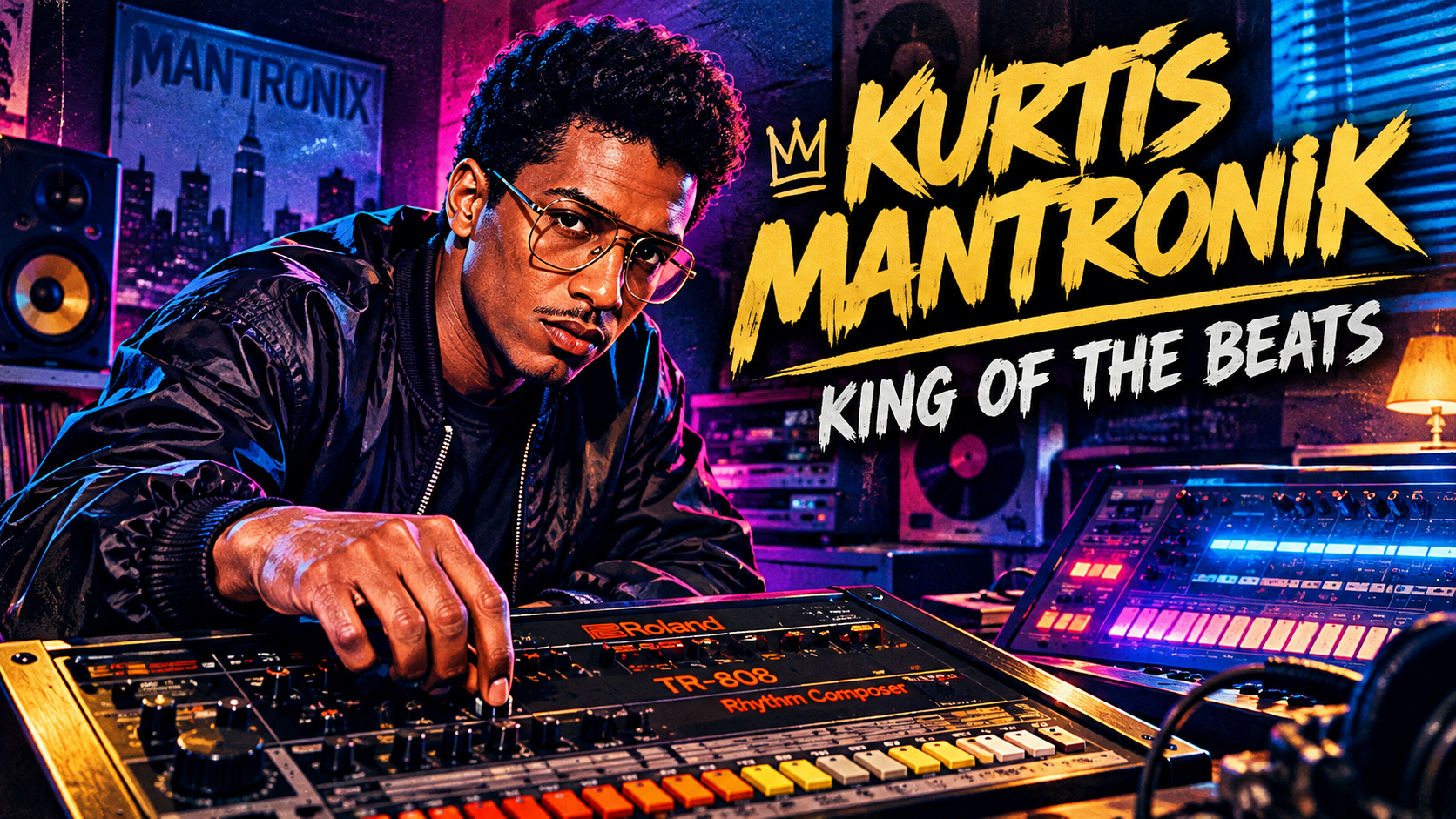
Kurtis Mantronik is a Jamaican-born producer, DJ and musician best known as the production force behind Mantronix, a defining electro-hip-hop group of the 1980s. After growing up partly in Canada, he became involved in New York’s hip-hop scene and met rapper MC Tee while working in a downtown record shop. The duo’s demo led to Sleeping Bag Records and a run of distinctive singles. In a 2024 Reverb interview, he describes experimenting with home rhythm machines before encountering the Roland TR-808 in the recording studio. A real archival portrait of him also appears with that original interview; the featured artwork here is an original AI illustration rather than a claim to be a historical photograph.
Why he matters: Mantronik treated machines as the central compositional engine of a record. His work was neither simply a replayed funk groove nor merely a rapper over a static drum loop. Programming, editing, bass sequencing and mixing became audible artistic decisions—and his later work carried that sensibility into dance and R&B.
Machine funk begins with rhythm, not polish
Mantronik has described his early 808 sound as direct and largely unprocessed. That matters because later producers often think of drum machines through layers of effects, saturation and software processing.
On the early Mantronix records, the raw electronic drum sound is part of the aesthetic. The kick, snare and percussion do not imitate a live drummer. They announce that the machine is the rhythm section.
Explore modern creator gear: browse Home Studio Gear at GearReady.
“Fresh Is the Word” becomes the breakthrough
Mantronik’s account of recording “Fresh Is the Word” is a classic learning-by-doing story. He entered a 24-track studio, encountered a TR-808 and had to translate the beat he had built into a professional recording environment.
The important detail is that the process was not yet standardized. He was learning how the studio, drum machine and rapper fit together while making the record.
The 808 is not decoration—it is architecture
In this production style, the drum machine defines how the entire arrangement behaves. Bass, vocal space and synth parts are organized around the rhythm rather than layered on top of a conventional band groove.
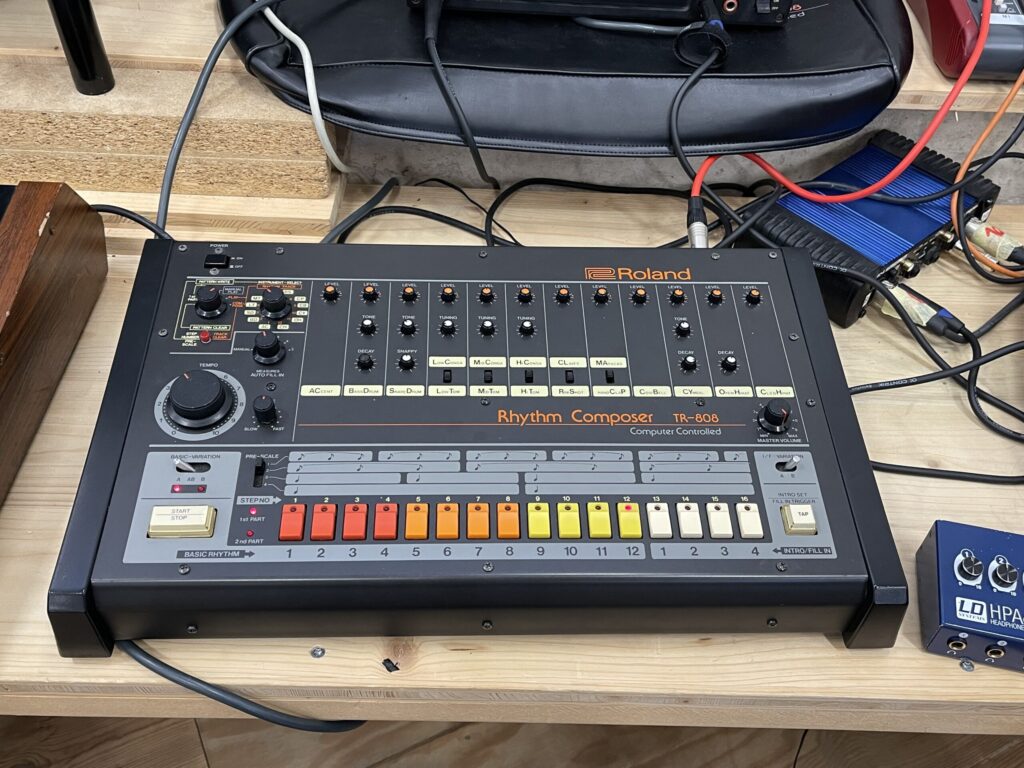
That helps explain why Mantronix can feel connected to hip-hop, electro and later forms of electronic dance music at the same time. The underlying idea is modular: machines create the pulse, and everything else is arranged around them.
Beyond the 808: the TR-909 and “Bassline”
These are photographs of the actual instrument models, not claims that the pictured units belonged to Mantronik.
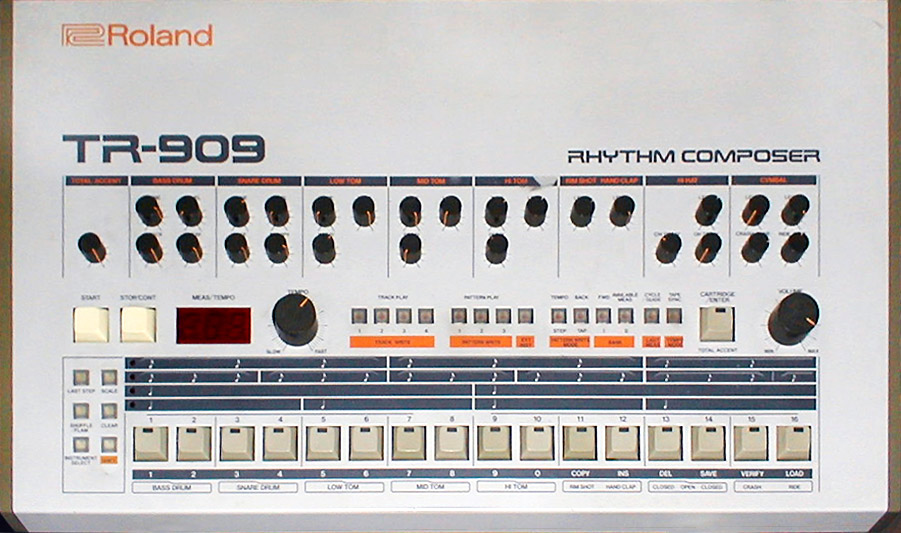
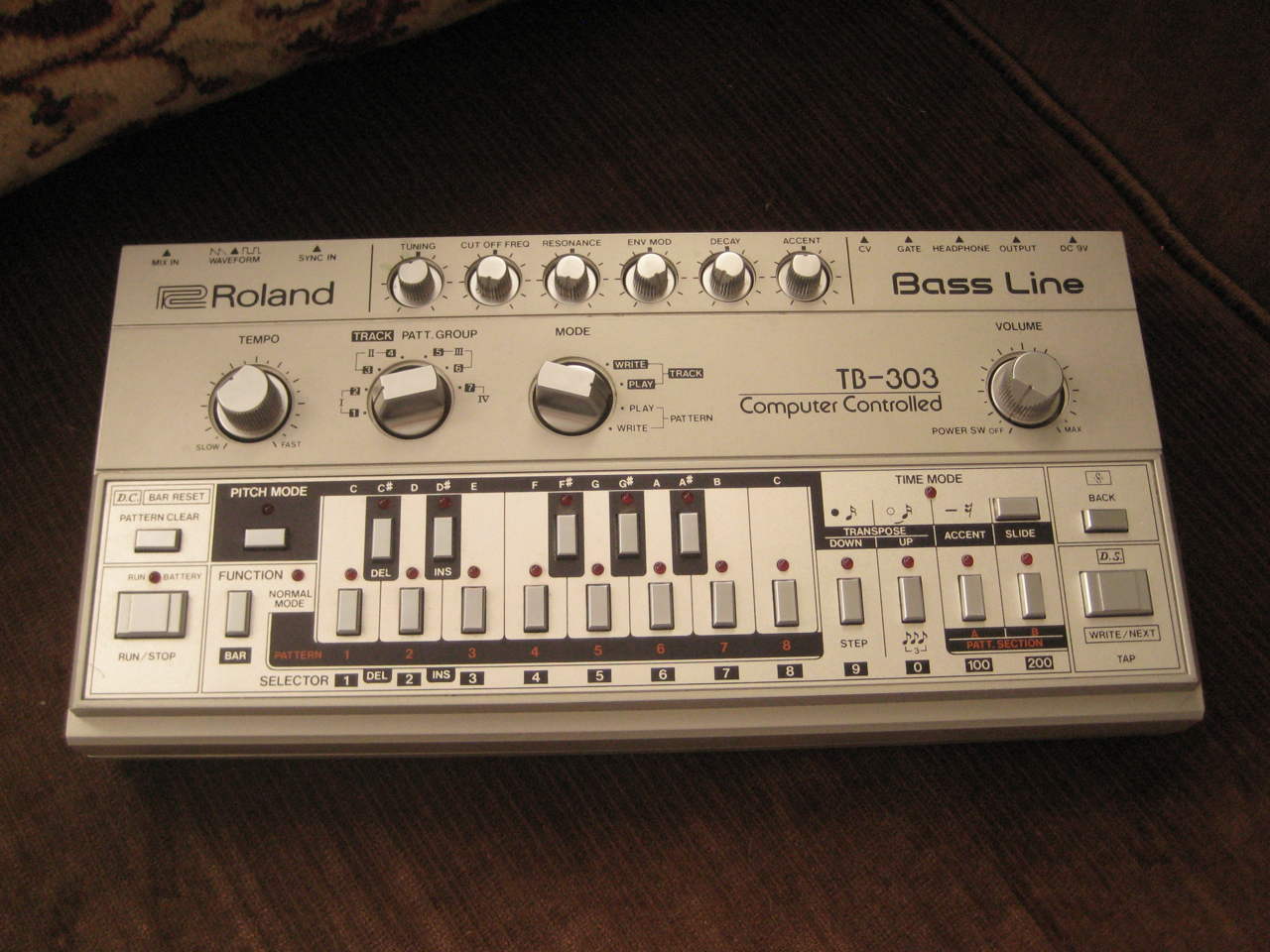
Not every early Mantronix beat was an 808. In a 2020 interview with 909originals, Mantronik specifically recalled using a Roland TR-909 on early tracks including “Bassline” and “Hardcore Hip Hop,” synchronizing patterns with a TB-303. That matters: the bigger innovation was how he programmed and combined machines, not loyalty to one drum model.
Explore music-making tools: browse Amazon Best Sellers in Musical Instruments.
MC Tee and Mantronik form a producer-MC unit
Mantronix originally paired Kurtis Mantronik with MC Tee. The chemistry is important because the production is not a backing track in the background. The rapper’s cadence and the machine rhythm are designed to work against one another.
This is a recurring 1980s hip-hop pattern: producer/DJ and MC are presented as one creative unit, making authorship easier to hear than on later albums assembled from a dozen unrelated beatmakers.
Sound design becomes identity
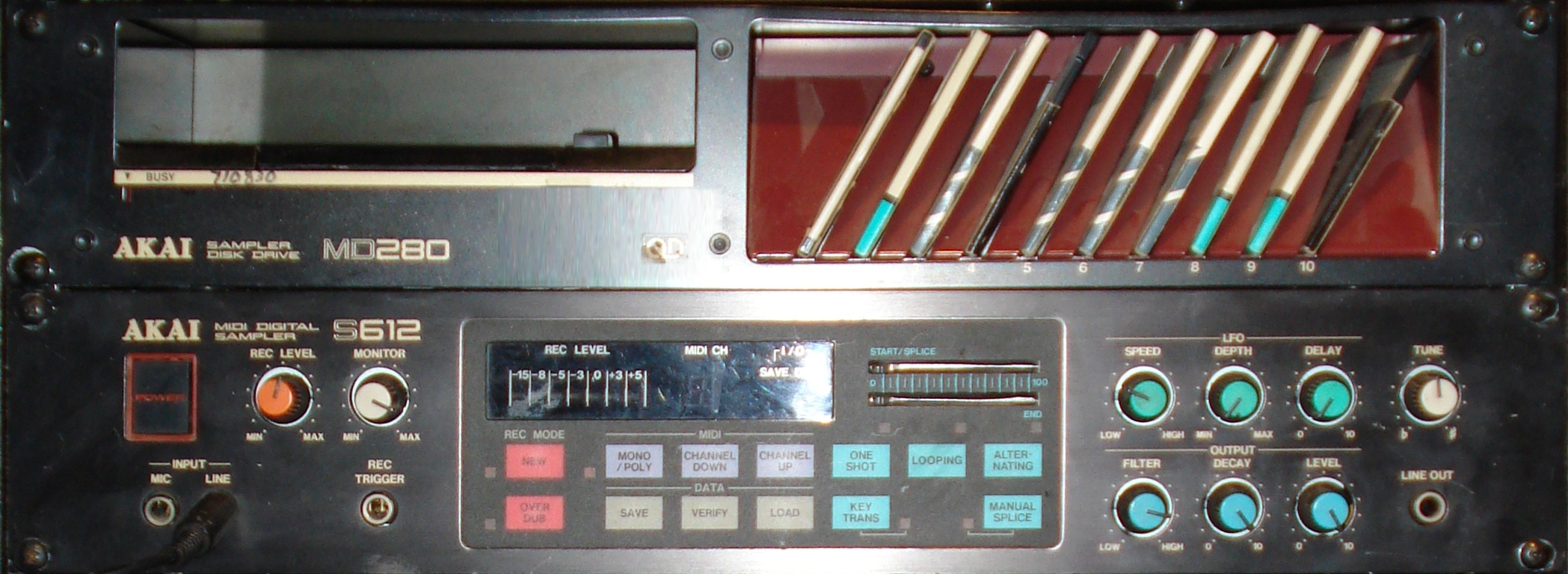
Original hardware photographs help explain the transition from pre-programmed rhythm to triggering and sequencing short sampled sounds. The machine below is an Akai S612, a sampler family Mantronik has discussed in production interviews; the pictured unit is a modern archival photograph.
Mantronik’s early work shows how a producer can be recognized through texture before the listener knows the credits. Tight programmed drums, electronic bass, abrupt edits and hard-edged synth language create a signature.
That signature did not require every track to use the same pattern. It came from repeated decisions about what a beat should feel like physically.
Explore recording hardware: browse computer recording equipment on Amazon.
Why the records matter to modern beatmakers
Today a laptop can hold thousands of drum sounds. Mantronik’s early setup offered far fewer options, which forced attention toward programming and arrangement.
The lesson is useful: a distinctive beat does not require infinite sound libraries. It requires choices that interact well—kick length, snare placement, bass movement, silence and the timing relationship between machine and voice.
Mantronik also shows why genre borders get messy
His work sits comfortably inside hip-hop history, but the electronic construction also points toward club music, electro and later producer cultures. That does not mean every electronic beat descends from Mantronix.
It means his catalog is a strong example of how the same machines can participate in several musical scenes at once.
“King of the Beats” (1988): hear the later blueprint
The phrase in this article’s headline also names a 1988 Mantronix instrumental. It belongs to the later In Full Effect era, so it should not be treated as a 1985 debut recording. Listening to it after “Fresh Is the Word” and “Bassline” demonstrates how Mantronik’s beat programming expanded toward more elaborate rhythmic construction. The MusicBrainz King of the Beats: Anthology 1985–1988 listing documents the surrounding early catalog; Mantronik himself describes making “King of the Beats” with a Sequential Circuits Studio 440 in a Reverb interview. Original-release and later-compilation dates should not be confused.
Mantronix complete core studio-album discography: 1985–1991
Five studio albums, five different stages of one production idea. “The complete discography” is easily overstated because Mantronik worked as a group member, solo artist, producer and remixer, and multiple 12-inch mixes and reissues can be counted separately. The chronological index here covers all five core Mantronix studio LPs, highlights the principal singles and important outside productions, and separates original releases from later reissues. It is not an unverified assertion that every remix or soundtrack appearance is listed.
| Year | Mantronix album | Personnel / identity | Representative recordings |
|---|---|---|---|
| 1985 | The Album | Kurtis Mantronik + MC Tee; raw electro-rap | “Fresh Is the Word,” “Needle to the Groove,” “Bassline,” “Hardcore Hip Hop,” “Ladies” |
| 1986 | Music Madness | Mantronik + MC Tee; samples and layered editing | “Who Is It?,” “Scream,” “We Control the Dice,” “Music Madness” |
| 1988 | In Full Effect | Final group studio LP with MC Tee; Capitol era begins | “Simple Simon (You Gotta Regard),” “Sing a Song (Break It Down),” “Join Me Please,” “King of the Beats” era |
| 1990 | This Should Move Ya | Bryce Luvah and later group configuration; hip-house and crossover R&B | “Got to Have Your Love,” “Take Your Time,” “This Should Move Ya,” “I Get Lifted” |
| 1991 | The Incredible Sound Machine | Later Mantronix lineup; stronger song-led pop/dance emphasis | “Don’t Go Messin’ with My Heart,” “Step to Me (Do Me),” “Flower Child,” “If You Could Read My Mind” |
Verification: Apple Music’s Mantronix album catalog, AllMusic’s group discography and MusicBrainz release and credit records. Years identify original album eras, not later digital upload dates or reissue release dates.
Original album track-by-track index (expand each record)
The releases below are organized by specific album configurations, not an invented universal track count. Original LP, CD and reissue editions sometimes differ, so exact configurations and source links are provided. A historical album track list does not imply that every recording has a surviving official music video.
1985: The Album — 7 tracks
Original album program; CD reissues differ in bonus tracks. Reference track listing.
- Bassline
- Needle to the Groove
- Mega-Mix
- Hardcore Hip Hop
- Ladies
- Get Stupid “Fresh,” Part 1
- Fresh Is the Word
1986: Music Madness — 9 tracks
Representative UK/expanded track configuration; some vinyl versions omit/remix material. Reference track listing.
- Who Is It?
- We Control the Dice
- Listen to the Bass of Get Stupid Fresh, Part II
- Ladies (UK Remix)
- Big Band B-Boy
- Music Madness
- Electronic Energy Of…
- Scream
- Mega Mix
1988: In Full Effect — 9 tracks
Nine-track original Capitol album. Reference track listing.
- Join Me Please… (Home Boys Make Some Noise)
- Love Letter (Dear Tracy)
- Gangster Boogie (Walk Like Sex… Talk Like Sex)
- In Full Effect
- Get Stupid, Part III
- Simple Simon (You Gotta Regard)
- Sing a Song (Break It Down)
- Do You Like… Mantronik?
- Mega-Mix (’88)
1990: This Should Move Ya — 12 tracks
Twelve-track Capitol CD listing; other releases include different mixes and “Take Your Time” as a single. Reference track listing.
- This Should Move Ya
- Got to Have Your Love
- Sex-N-Drugs and Rock-N-Roll
- Tonight Is Right
- (I’m) Just Adjustin My Mic
- Stone Cold Roach
- I Get Lifted
- Don’t You Want More
- I Like the Way (You Do It!)
- Get Stupid, Part IV (Get on Up ’90)
- (I’m) Just Adjustin My Mic (’90)
- King of the Beats Lesson #1
1991: The Incredible Sound Machine — 11 tracks
Eleven-track Capitol CD including extended mix. Reference track listing.
- Step to Me (Do Me)
- Don’t Go Messin’ with My Heart
- Flower Child (Summer of Love)
- Gimme’ Something
- Put a Little Love on Hold
- Well I Guess You
- Step to Me (Do Me) (12-inch Extended Mix)
- If You Could Read My Mind
- Make It Funky
- (I’m) Just Adjustin My Mic (’91)
- Operation Mindcrime
1998: I Sing the Body Electro — 11 solo-album tracks
This is a Kurtis Mantronik solo album, not a sixth original Mantronix studio album. AllMusic 1998 album listing.
- King of the Beat v3.0
- Mad
- On the Beatbox
- Push Yer Hands Up
- One Time, Feel Fine
- Original Electro
- Seek and Destroy
- Baby, You Blow My Mind
- Cow Bites Man
- Bass Machine Re-Tuned
- Hush
2014: Journey to Utopia — core solo compositions and remixes
The second solo studio album was issued in 2014 on Street DNA; digital and CD versions differ. Kurtis Mantronik catalog.
- Got to Have You
- Need Your Love
- Another Dirty Love Song
- So Many Times (I Thought OK)
- (Got to Be) Free (Remix)
- Good Woman (Jerome Price Remix)
- 2:00am (I’m So Fucked)
- Deeper
- DJ Mix (continuous program of tracks 1–8)
Listening availability: The embedded players on this page cover identifiable landmark tracks and one or more recordings from each core Mantronix album. Some obscure cuts and remixes have no verified official YouTube player, so they remain in the sourced track index rather than being matched to unrelated uploads. Use Mantronix’s official artist channel to explore available digital tracks; publication and reissue dates on YouTube do not replace the original release dates above.
1985 — The Album: the seven-track foundation
The original program includes “Bassline,” “Needle to the Groove,” “Mega-Mix,” “Hardcore Hip Hop,” “Ladies,” “Get Stupid ‘Fresh,’ Part 1” and “Fresh Is the Word,” as reflected in MusicBrainz’s reissue track listing. Its identity is the dialogue between MC Tee’s emphatic cadence and Mantronik’s tightly separated machine hits. Hearing the original rhythm section matters more than repeating descriptions such as “ahead of its time.” The two first recordings are embedded above; this additional “Needle to the Groove” upload provides a third sonic comparison.
1986 — Music Madness: layering beyond the single drum loop
The second LP broadened Mantronix beyond a single 808 sound. “Who Is It?,” “Scream” and “We Control the Dice” are important stops because the programming places short sound fragments, MC Tee’s delivery and percussive effects into more densely edited arrangements. This is also the period when the group’s appeal was reaching electro and club audiences alongside hip-hop listeners. the original 1986 Sleeping Bag release listing documents the 1986 album and its musical direction. The period recording below is presented as an archival upload, not as verified original-period filmed footage.
1988 — In Full Effect: the Capitol transition
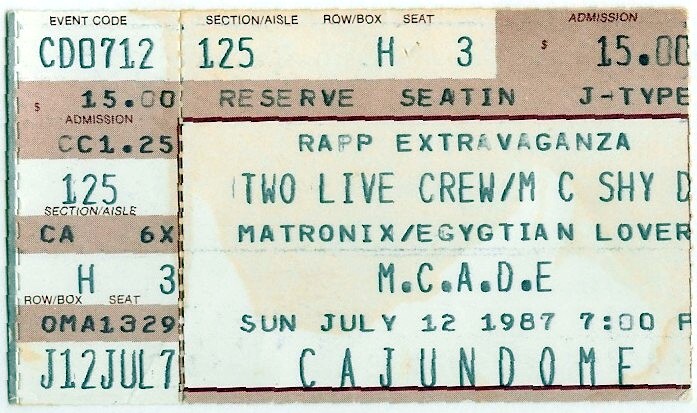
By the third album Mantronik had expanded the range of synths, samples and drum-sequencing decisions without abandoning his commanding low-end. In Full Effect was the final Mantronix studio album with MC Tee. “Simple Simon (You Gotta Regard)” and “Sing a Song (Break It Down)” represent the more melodic, structured side of that phase. The separately discussed “King of the Beats” recording is embedded in the section above and must not be confused with a modern compilation.
1989–1990 — This Should Move Ya: crossover becomes part of the blueprint
The fourth album followed MC Tee’s departure and featured a changed group sound, with Bryce “Luvah” Wilson and collaborator Wondress among the recognizable voices. “Got to Have Your Love,” initially released as a single in December 1989, became a major crossover hit in 1990; “Take Your Time” also charted in the UK. Instead of hearing this as a rejection of hip-hop, listen for Mantronik’s continuing programmatic precision beneath a more radio-friendly vocal arrangement. The Capitol release listing identifies the main album’s tracks; some editions include different mixes.
1991 — The Incredible Sound Machine: the later band sound
On the fifth core studio album, songs such as “Don’t Go Messin’ with My Heart,” “Step to Me (Do Me),” “Flower Child” and “If You Could Read My Mind” moved further into dance and pop structures. AllMusic’s album listing identifies the track program. The transition is historically significant because it demonstrates a producer’s flexibility, but a 1991 group recording should not be used as evidence that the original 1985 Mantronix lineup was unchanged.
Selected Kurtis Mantronik solo releases and producer credits beyond the group
Mantronix is not the same as Mantronik’s entire professional credit history. The producer also recorded solo electronic music and worked with outside artists. The examples below are documented career branches; they are not falsely counted among the five group studio LPs.
- 1986 — Just-Ice, Back to the Old School: Mantronik helped produce this hard-edged early solo rap record, including “Cold Gettin’ Dumb.” Their relationship is discussed in a 2024 joint interview. Listen for what changes when MC Tee’s partnership is replaced with Just-Ice’s darker delivery.
- 1986–1987 — Joyce Sims, “(You Are My) All and All” and Come into My Life: his studio rhythm programming also entered club-oriented R&B; Mantronik’s interview describes his role in building the “All and All” backing track. Songwriting, production and remix credits should be checked per version.
- Other 1980s Sleeping Bag/Fresh work: recordings linked to T La Rock and Tricky Tee show the impact of a producer with an identifiable sound moving outside his named group. A group credit does not automatically apply to every guest session.
- 1998 — I Sing the Body Electro: a solo electronic album distinct from a Mantronix LP; its title and original release belong to the later solo chapter. See AllMusic’s Kurtis Mantronik artist catalog.
- 2000s–2010s: the solo electronic, remix and dance-production period also includes Journey to Utopia (2014) in catalog listings. The mixes and collaborative credits need source-by-source verification; they cannot be reduced to one “Mantronix” discography.
- 2024 onward: Mantronik and Just-Ice discussed new Mantronix activity in 2024. The modern Apple Music catalog shows releases through 2026, but it does not establish that the 1985 group lineup returned or that each later release is an original studio album.
What makes the blueprint distinctive? (1) Rhythm machines are treated as an expressive ensemble. (2) A producer’s editing choices become an audible signature. (3) Rap and club production share the same programmed foundation. (4) The career path extends through songwriting, engineering, remixing and new technology without erasing the original recordings.
A practical listening path
- Start with “Fresh Is the Word” and focus only on the drums.
- Listen again for the interaction between bass and kick.
- Compare the vocal rhythm with the programmed rhythm.
- Move through later Mantronix records and track what changes while the machine-driven identity remains.
- Then compare the workflow with modern samplers and grooveboxes.
For the hardware categories themselves, read Samplers, Grooveboxes and Drum Machines. Compare his machine-first rhythm with Marley Marl’s sampled-drum production and Pete Rock’s later jazz-sampling approach.
Frequently asked questions about Kurtis Mantronik and Mantronix
Is Kurtis Mantronik the same as Mantronix?
No. Kurtis Mantronik is the producer and musician; Mantronix is the group whose classic studio albums were released from 1985 to 1991. His outside productions, remixes and solo albums belong in separate discography categories.
How many original Mantronix studio albums were released?
Five: The Album (1985), Music Madness (1986), In Full Effect (1988), This Should Move Ya (1990) and The Incredible Sound Machine (1991). Reissue collections and modern releases are not automatically additional original studio albums.
What is “King of the Beats”?
It is a Mantronix recording associated with Mantronik’s late-1980s rhythm programming; “King of the Beats” is also used in the title of a later anthology. The original recording and the later compilation should not be assigned the same release date.
Which drum machines did Mantronik use?
He has discussed learning on a Boss Dr. Rhythm, experimenting with Roland TR-606 and TB-303 programming and then using the TR-808 in the studio for “Fresh Is the Word.” He also recalled TR-909 work on “Bassline” and other early tracks. These are his recollections, not proof every piece of pictured hardware was used on every recording.
Who performed on the classic Mantronix albums?
MC Tee was the early rapper and principal vocal collaborator. After his departure the group changed direction and personnel, notably introducing Bryce “Luvah” Wilson, Wondress and additional singers or collaborators. Compare the credits on the individual album versions rather than assuming one fixed band throughout.
Did Mantronik work with Joyce Sims and Just-Ice?
Yes. His studio work helped shape recordings by both artists. “Back to the Old School,” “All and All” and the late-1980s dance productions show how the producer’s rhythmic vocabulary extended outside the Mantronix name. Exact composition and production credits vary across releases and remixes.
Why aren’t all 68 listed tracks embedded as YouTube videos?
The full album-track index is sourced, but not every original album cut has a verified, playable, official music video. The article embeds identified recordings and original-period clips where possible, instead of fabricating official footage or embedding unrelated remixes.
Sources and research notes
- MusicRadar — Kurtis Mantronik interview on early drum machines and the 808 (includes an authentic press portrait; not republished here without reuse permission)
- AllMusic — five original Mantronix studio albums and stylistic evolution
- Reverb — Kurtis Mantronik interview on drum machines, studio craft and outside work
- Just-Ice and Mantronik interview — 2024 collaboration and 1980s production history
- Roland TR-909 photo — Emhoo / Metoc, CC BY-SA 3.0; license
- Roland TB-303 photo — eternal jamzzzz, CC BY 2.0; license
- Akai S612 photo — Angie Schwendemann / Shoulder-synth, CC BY 2.0; license
- Featured image disclosure: original AI-generated editorial illustration of Kurtis Mantronik and a vintage studio; not a historical photograph or evidence of the exact equipment pictured in any recording session.
- 909originals — Mantronik on the TR-909, TB-303 and recording “Bassline”
- Red Bull Music Academy Daily — The Birth of Mantronix
- Wikimedia Commons — 1987 Rapp Extravaganza ticket naming Mantronix (public domain)
- Wikimedia Commons — Roland TR-808 at SMEM by 1904.CC (CC BY 4.0)