Some recordings become important because they top charts. Others become important because later musicians keep finding new things inside them. The Winstons’ 1969 recording “Amen, Brother” belongs to the second category.
Near the middle of the track, drummer G. C. Coleman plays a short unaccompanied passage that later producers would isolate, pitch, loop, slice and rebuild. That passage became known as the Amen break. Its afterlife stretches across hip-hop, breakbeat, jungle, drum & bass and other forms of sample-based production.
The important story is not simply that one old drum break was reused many times. It is that one recording became a relationship hub: a point where artists, producers, genres, technologies and eras connect. PCMusicMax makes that kind of musical lineage easier to explore across recordings, credits, versions and later connections.
Where the Amen break came from
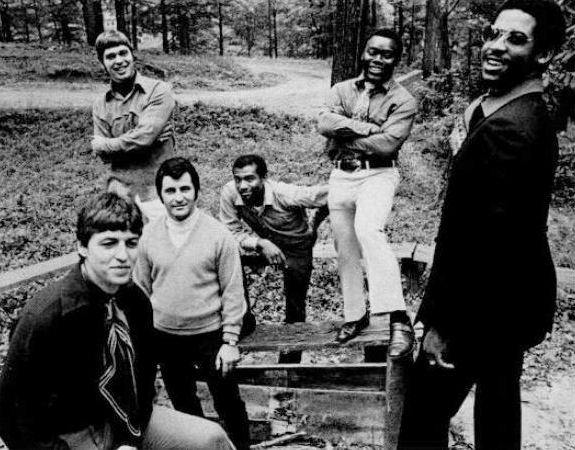
“Amen, Brother” was recorded by The Winstons, a Washington, D.C.-based soul group. MusicBrainz’s release data credits G. C. Coleman on drums, Richard Spencer as composer, Don Carroll as producer and Emory Gordy Jr. as arranger, and places the recording at Le Fevre Sound Studios in Atlanta. The track appeared in 1969 alongside the group’s better-known “Color Him Father.”
The A-side had the conventional signs of success. The Recording Academy lists The Winstons as a nominee for R&B Performance by a Duo or Group with Vocals for “Color Him Father,” while the song itself won the Grammy for Best Rhythm & Blues Song for songwriter Richard Spencer. “Amen, Brother” was not the obvious hit. Yet the B-side ended up exerting an enormous production influence decades beyond its original release window.
That contrast is one reason the recording matters. Chart position can measure one kind of importance. Reuse, influence, reinterpretation and technical usefulness can reveal another.
Build a home production setup: The Amen story begins with performance and continues through recording technology. Explore home studio gear at GearReady for a more music-focused recording and beatmaking workspace.
Hear the original Amen break
Start with the source. This upload of The Winstons’ 1969 recording “Amen, Brother” lets you hear G. C. Coleman’s famous drum break in context; the break begins at about 1:26. Then compare that source with the N.W.A. example beside it to hear how the lineage moves into hip-hop.
A downstream hip-hop connection
The official N.W.A. video gives readers a playable example from the Amen-break lineage. MusicBrainz documents the sample relationship between “Amen, Brother” and “Straight Outta Compton,” creating a clear bridge from late-1960s funk into a landmark hip-hop recording.
Why those few seconds were so useful to producers
A breakbeat is valuable because it gives a producer a section where the rhythm is exposed enough to be reused. The Amen passage offers a compact drum performance with strong kick and snare information, ghost-note movement and enough internal variation to remain interesting after repetition.
Early DJs and beat collectors did not have today’s searchable sample libraries. Breaks circulated through records, DJ knowledge and compilations. In a Red Bull Music Academy interview, Breakbeat Lou described how foundational breaks were gathered for the Ultimate Breaks & Beats series and recalled slowing “Amen, Brother” from a 45 RPM record to 33 RPM for a heavier hip-hop feel. That detail is important: the Amen’s history was never only about copying a loop. It was also about changing playback, tempo and context.
As samplers and sequencing workflows became more accessible, producers could go further. Instead of looping the break exactly as performed, they could slice it into smaller pieces, rearrange individual hits, change pitch, alter timing, layer it with other drums and build patterns that no longer behaved like the original performance.
From hip-hop break to jungle vocabulary
The Amen break circulated through hip-hop and breakbeat culture before becoming deeply associated with British jungle and drum & bass. Sampling databases such as WhoSampled document the break inside a large network of later recordings, including hip-hop records, while production histories describe its movement into faster UK dance music.
MusicRadar’s history of breakbeat production captures the key change: jungle producers did not merely replay the same break at a higher tempo. They treated recorded drums as editable material. Chopping and restructuring the rhythm turned a short human performance into a programmable vocabulary.
That distinction helps explain why one source can produce so many different descendants. Two tracks may both use the Amen break and still sound nothing alike because the producer’s decisions about pitch, slicing, sequencing, layering, filtering and context are different.
The Amen break is a relationship graph, not just a trivia fact
A normal music article might stop after saying that “Amen, Brother” was heavily sampled. A relationship-first music database asks more useful questions:
- What recording contains the original break?
- Who performed the drums?
- Which later recordings used or transformed it?
- Which producers helped spread it into new genres?
- How did hip-hop use differ from jungle and drum & bass use?
- Which technologies made increasingly complex manipulation possible?
- What other breakbeats traveled through similar production networks?
Those questions create multiple durable search paths from one recording. A listener might enter through The Winstons. A producer might enter through drum programming. A hip-hop fan might enter through a later sample. A drum & bass listener might enter through jungle history. A gear researcher might enter through samplers and production workflow.
The value is in connecting those paths without pretending they are the same search intent.
How to read an Amen Break connection map
A useful connection map separates the source recording from later recordings, credits and relationship types. For “Amen, Brother,” that means keeping these layers distinct:
- Artist: The Winstons
- Recording: “Amen, Brother”
- Contributors: the musicians, producer and arranger attached to the recording
- Relationship type: direct sample, replayed or interpolated material, cover, remix, shared credit or clearly labeled editorial similarity
- Connected recordings: later records linked to the source
- Genre paths: funk, hip-hop, breakbeat, jungle and drum & bass
- Creator path: breakbeat editing, sampling, slicing and sequencing
Following those layers makes the lineage easier to understand without collapsing the original performance, later uses and editorial comparisons into one generic “song connection.”
The creator-tech lesson: tools changed what a drum performance could become
The Amen story is also a technology story. A drummer performed the source once. Later DJs changed its feel through playback speed. Producers then used samplers and sequencers to treat that performance as modular audio.
Explore sampling tools: The Amen break became powerful because producers could capture, chop and rearrange recorded audio. Browse audio samplers on Amazon if you want to explore that workflow with modern hardware.
This creates a natural bridge between music history and creator technology. From the source recording, readers can continue into practical explanations of sampling concepts, drum editing, DAW workflow and production hardware without turning the history into an unrelated gear pitch.
The most useful next step depends on the reader’s intent. Someone researching The Winstons may simply want the historical and credit trail. Someone studying how chopped breaks work may benefit from a sampler, DAW, controller or production tutorial. The recommendation should follow the question, not interrupt it.
A warning about sample databases and credits
Sample databases are excellent discovery tools, but no single third-party database should be treated as unquestionable truth. A reliable relationship trail combines open structured metadata, official release or credit information where available, reputable historical sources and relationship databases used as supporting signals.
That matters because sample history can involve disputed credits, later settlements, replayed parts, interpolations and incomplete metadata. PCMusicMax should clearly distinguish a direct audio sample from an interpolation, a cover from a remix, and a documented influence from an editorial similarity.
Why the Amen Break belongs near the center of PCMusicMax
“Amen, Brother” is almost a perfect stress test for the PCMusicMax model. It connects an overlooked B-side to a major songwriting award, a specific drummer to generations of producers, American funk to hip-hop, and hip-hop break culture to the development of jungle and drum & bass. It also connects editorial history to a repeat-use search tool.
That is the larger PCMusicMax idea: music should be explorable as a living network. Songs lead to other songs. Recordings lead to producers. Producers lead to scenes. Scenes lead to technology. Technology changes how the next generation makes music.
The Amen break is not interesting merely because it was sampled. It is interesting because those samples created a map.
Connect a recording setup: If the production side of the Amen story has you thinking about recording, sampling or monitoring your own audio, browse audio interfaces on Amazon for hardware that connects microphones, instruments and studio monitors to a computer-based workflow.
Shopping links may support PCMusicMax at no extra cost to you. As an Amazon Associate, we may earn from qualifying purchases.
Sources and research notes
- MusicBrainz — The Winstons, Color Him Father release and “Amen, Brother” credits
- Recording Academy — The Winstons Grammy nomination record
- Red Bull Music Academy — Breakbeat Lou interview
- MusicBrainz — original Straight Outta Compton release and sample relationship evidence
- Twenty Thousand Hertz — Amen Break history with Nate Harrison
- Tufts University — Nate Harrison, Can I Get an Amen?
- MusicRadar — history of breaks in music production
- WhoSampled — supporting relationship-discovery reference; PCMusicMax independently verifies publication-level claims