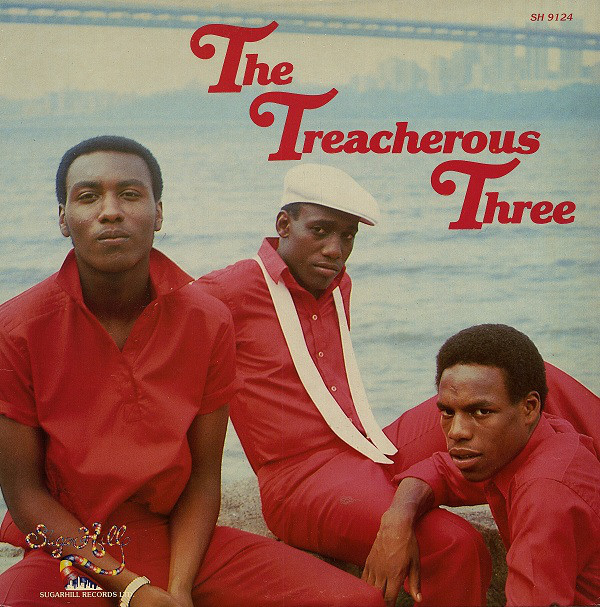
The Treacherous Three matter because their recordings demonstrate how intricate MC technique developed before the late-1980s golden-age explosion. Their routines use faster phrasing, coordinated entrances and verbal patterns that challenge the stereotype of old-school rap as nothing more than simple party chants. Kool Moe Dee, L.A. Sunshine and Special K are the best-known trio, although the group’s earliest history also includes Spoonie Gee. Understanding that changing membership matters when linking a record to a particular performance era. The group is best studied through the original singles and documented recollections rather than vague claims that one artist suddenly invented technical rapping.
The Smithsonian’s Anthology of Hip-Hop and Rap includes “The Body Rock” among its early recordings, a useful indication of the song’s historical significance. The group’s relationship with Enjoy Records and later Sugar Hill Records places it in the transition from extended live routines to commercial singles. That transition changed the way MCs structured performances for records and audiences. A studio performance could preserve multiple voices and rapid handoffs, but it also required arrangement decisions that a neighborhood party did not. Listening to the first releases helps reveal those choices without projecting later battle-rap conventions onto earlier music.
The original lineup story begins before the best-known records
The group’s origins are best understood as a developing Harlem collective rather than a fixed lineup whose membership never changed. Accounts from Spoonie Gee and Kool Moe Dee describe the early involvement of Spoonie and L.A. Sunshine, with Special K entering the better-known recording configuration. That distinction matters because a founding participant may not be the same as a member pictured on a later sleeve. A precise article should identify the performers associated with the particular single under discussion. Otherwise a listener may incorrectly assign one person’s rhymes or musical decisions to someone who was not yet part of that session.
Bobby Robinson’s Enjoy label provided an important route into recording for early New York MCs. The move from a rehearsal or stage routine into a studio imposed new questions about timing and arrangement. A group had to make its distinct voices legible on a record rather than relying on live crowd recognition. The result was a documented version of skills that may already have evolved over many neighborhood performances. The available sources support that recording transition more firmly than sweeping claims about who rapped a particular way first.
Explore recording hardware: browse computer recording equipment on Amazon.
Harlem brought its own MC traditions
Harlem’s MC tradition was connected to a larger New York performance circuit, not isolated from the music developing in the Bronx. Parties, clubs and shared bills allowed performers to hear one another and adapt ideas. The Treacherous Three’s rapid phrasing emerged from that competitive social environment. It is useful to discuss the geographical context without treating every innovation as the exclusive property of one borough. Hip-hop history becomes more accurate when neighborhood identity and cross-city exchange are both recognized.
A group biography should also distinguish an oral account of an early performance from a commercial recording whose release can be dated. The earliest routines were not always documented with reliable audio or full personnel lists. Later interviews can fill in personal memories, but they must be attributed as recollections. Record labels and discographies provide stronger evidence for exact release titles and dates. Combining those sources gives readers an informed picture of the scene without manufacturing certainty about every night in a club.
Speed becomes useful when it stays organized
The group’s speed was important because it was coordinated with articulation and rhythm, not because the MCs simply tried to fit as many words as possible into a bar. Kool Moe Dee’s dense phrasing made complex verbal patterns part of a memorable group identity. A rapid passage loses its effect if the listener cannot hear how the accents fall. The Treacherous Three used rehearsed routines to keep those details organized even when a verse accelerated. That combination of speed and intelligibility explains why their recordings remain useful to people studying MC technique.
Listen to a section of “The New Rap Language” while following the pulse rather than counting syllables. Identify where the rhymes land and whether a line extends beyond the place a slower MC might stop. Then listen for handoffs that change the pace without interrupting the underlying groove. These details reveal craft that the label “fast rap” alone cannot explain. The record should be discussed as a particular arrangement and performance, not as proof that every later rapper learned directly from the trio.
Shopping links may support PCMusicMax at no extra cost to you.
Explore modern creator gear: browse Home Studio Gear at GearReady.
“The Body Rock” preserves the group inside recorded history
“The Body Rock” is a valuable listening artifact because it preserves the group’s approach within the early commercial recording timeline. Its place in the Smithsonian anthology gives readers an accessible reference to the actual song, not merely later descriptions of its reputation. The recording captures coordinated MC phrasing around a funk-oriented backing arrangement. That means both the vocal technique and the musical support deserve analysis. Concentrating only on the group’s reputation for speed would miss how the track functions as a complete dance record.
Listen to the original single and pay attention to the way the voices change places over the instrumental groove. Some phrases create anticipation for the next performer, while others emphasize a collective hook. The instrumental passages also matter because they determine how much rhythmic space the MCs have to work with. Comparing the vocal and instrumental versions can help isolate that underlying arrangement. This is a much more specific explanation of the record than repeating a generalized first-ever claim without documentation.
Group routines create a different form of virtuosity
A solo MC can control the pacing of a verse without coordinating with another vocalist. A three-person group has to plan entrances, shared lines, overlapping phrases and transitions between distinct voices. That teamwork is a form of musical technique in its own right. The Treacherous Three’s reputation depends partly on how clearly those group routines are delivered. Their records offer evidence that lyrical skill and rehearsed ensemble timing developed together in early hip-hop.
Try mapping a short section on paper by assigning a different mark to each vocalist’s entrance. Then replay the recording to see whether the transitions fall on strong beats or interrupt an expected phrase. Notice how repetition helps a listener recognize who is speaking even when the delivery accelerates. The exercise makes the group’s structure visible instead of reducing their skill to an abstract ranking. It also gives a useful comparison with later crews that organize group vocals in different ways.
Explore music-making tools: browse Amazon Best Sellers in Musical Instruments.
Kool Moe Dee becomes the bridge to battle history
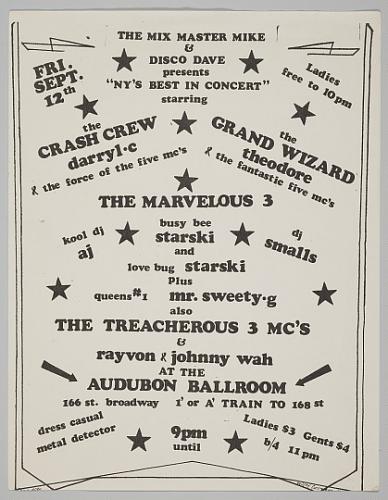
Kool Moe Dee’s later battle history is one reason listeners continue to revisit the Treacherous Three. His widely discussed confrontation with Busy Bee at Harlem World in 1981 became part of hip-hop’s account of changing MC expectations. The event is often used to illustrate a shift toward technical responses and direct competition. Yet this later reputation should not make the group’s earlier records disappear from the story. Moe Dee developed his skills within a crew whose style already emphasized speed, structure and audience impact.
A responsible battle history should distinguish surviving footage, witness accounts and stories repeated long after the event. These sources do not always provide an identical chronology or a complete record of every exchange. The strongest analysis explains what the participants are reported to have done and why listeners later considered the encounter important. It should avoid reconstructing dialogue that cannot be verified. Placing the battle alongside the group’s recordings gives readers enough context to understand the technical stakes.
How to study the Treacherous Three
Start the listening sequence with “The New Rap Language,” which provides a clear early demonstration of rapid group phrasing. Follow with “The Body Rock” to hear a different arrangement around the performers. Focus first on how each voice enters and exits, not on which MC you already prefer. On a second pass, count the recurring rhythmic accents and the spaces between their lines. That process turns a general claim about technical excellence into observations a reader can independently test.
Compare the label-issued original singles before exploring later reissues, remixes or live recreations. Changes in mastering can affect loudness, but the original performance and arrangement should remain the object of analysis. If an online upload is labeled official, verify its publisher and match the song to a trusted discography. Avoid assigning a later video to a 1980 release unless it really documents that era. That attention to version accuracy is crucial when using archival media to teach music history.
- Start with “The Body Rock” for the recorded group sound.
- Listen for synchronized phrases and vocal handoffs.
- Compare the pace with earlier party-style MC recordings.
- Trace Spoonie Gee’s role before Special K joined.
- Then move into the Busy Bee vs. Kool Moe Dee battle as a technique turning point.
Continue exploring
The Spoonie Gee connection is an important next step because it helps explain the group’s original lineup and earliest recordings. PCMusicMax’s Pumpkin article explores the studio musicians and independent-label network supporting related rap records. These two articles answer different questions: one concerns MC delivery, while the other concerns the production personnel behind a recorded groove. Reading them together makes the live-to-studio transition more understandable. The connection should not be mistaken for proof that every session shared the same performers or producer.
A further study of Busy Bee and Kool Moe Dee belongs in a dedicated historical-battle article with its own chronology and source checks. That subject has enough distinct evidence to require more than a short paragraph here. By separating topics, the site can offer readers meaningful internal paths without repeating a generic biography on every page. Each linked article should contribute new verified recordings, analysis or documentation. That is how a music-history network earns authority rather than merely increasing its number of URLs.
Sources and research notes
The Tuff City Records release of “Love Rap” and “New Rap Language” provides an accessible rights-holder source for the original material. The HistoryMakers oral-history finding aid for Kool Moe Dee records important details about the group’s membership and early recordings. The Smithsonian anthology provides another independent reference for “The Body Rock.” Together they establish a stronger basis than an unsourced list of first-ever achievements. Any contested claim about exactly who pioneered a particular technique should remain qualified until supported by direct evidence. The original labels and first-hand interviews also help distinguish a founding member’s recollection from the lineup actually heard on a particular single.
Each kind of source has a different job in a trustworthy article. The original recording supports audible observations about timing and vocal interaction. Label documentation helps establish the release and credits attached to the record. Firsthand recollections help explain early events that may not have been recorded, but their limitations should remain visible. Treating evidence and interpretation separately gives readers a far better understanding than a compressed paragraph of repeated hip-hop mythology.