
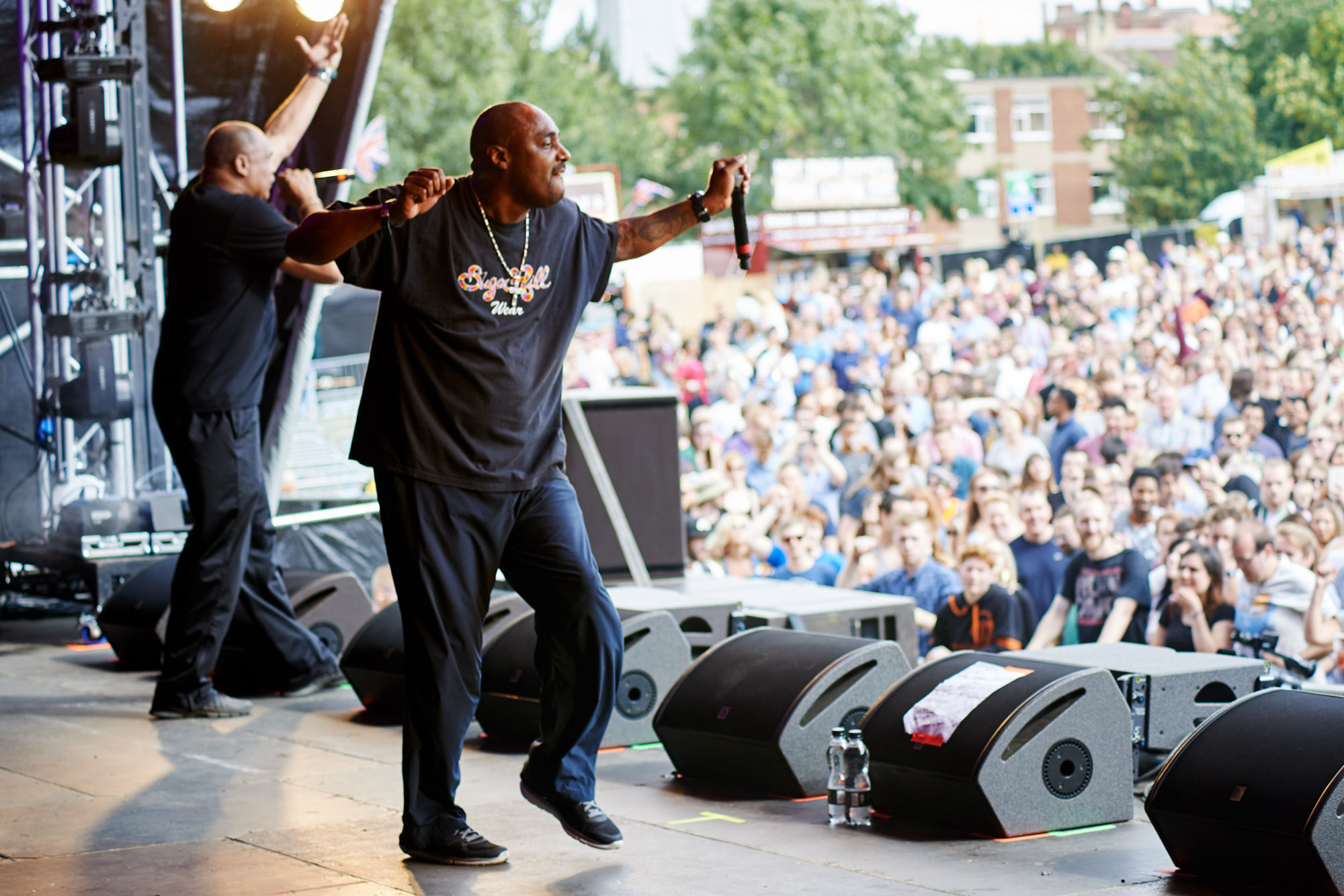
“Rapper’s Delight” did not invent hip-hop, and it was not the first rap recording released in 1979. Its breakthrough was different: the Sugarhill Gang single proved that rap could move from parks, clubs and circulating tapes into record stores, radio playlists and international charts. That shift changed who could hear hip-hop, how the music could earn money and which parts of the culture the record business chose to document.
The distinction matters. Fatback’s “King Tim III (Personality Jock)” appeared earlier, while the Smithsonian’s hip-hop anthology places it immediately before “Rapper’s Delight” in the recorded chronology. But the Sugarhill Gang record became the first rap single to reach the Billboard Hot 100 Top 40, peaking at No. 36, and it reached No. 3 in the United Kingdom. It was not the culture’s starting point. It was the record industry’s proof that rap could travel at scale.
Hip-hop already had an audience before the hit
By 1979, Bronx and Harlem audiences already knew hip-hop as a live experience. DJs extended percussion breaks. MCs built routines around timing, personality and crowd response. Crews competed for reputation, and performances circulated on cassette. The people doing that work did not need a national hit to prove the culture existed.
What the live system lacked was the distribution machinery of a commercial record. A park jam could transform a neighborhood. A twelve-inch single could be manufactured, shipped, reviewed, played repeatedly on radio and sold far beyond New York. “Rapper’s Delight” compressed part of a flexible live practice into a repeatable product.
“King Tim III” came first; “Rapper’s Delight” broke through
Calling “Rapper’s Delight” the first rap record erases an important detail. The Rock & Roll Hall of Fame’s DJ Kool Herc induction essay identifies Fatback’s “King Tim III” as the earlier release. The Smithsonian anthology uses the same sequence. “Rapper’s Delight” is better described as the first major recorded rap hit.
That wording is more accurate and more useful. “First release” is a chronology question. “First crossover hit” is a question of reach. The Sugarhill Gang record became a commercial event because its audience expanded beyond the existing hip-hop network.
Sylvia Robinson built a group for the recording opportunity
Producer and label executive Sylvia Robinson did not simply discover an established crew with years of shared routines. She assembled Big Bank Hank, Wonder Mike and Master Gee as the Sugarhill Gang for a recording opportunity. The Smithsonian identifies the three performers as Henry Jackson, Michael Wright and Guy O’Brien.
Robinson’s insight was commercial and editorial. She recognized that the energy of live MC performance could become a record, and she shaped a group capable of carrying that idea through a long studio performance. Her role belongs in both music history and business history: producer, organizer, label co-founder and early market maker.
For more on that side of the story, see our profile of Sylvia Robinson and the Sugar Hill Records business.
The “Good Times” groove made the record immediately legible
“Rapper’s Delight” used the musical framework of Chic’s 1979 hit “Good Times.” In the studio, Sugar Hill’s musicians recreated the recognizable bass-and-rhythm pattern rather than lifting a modern digital sample. The groove connected the new rap record to a dance-floor sound listeners already understood.
That familiarity helped the single cross between scenes, but it also created a rights dispute. Nile Rodgers and Bernard Edwards were later added to the songwriting credits after a settlement. The Library of Congress registry entry records the relationship and the revised credits.
The difference between a replayed groove, a sampled recording and a new composition is not academic. Each involves different evidence and potentially different rights. Our companion guide, From “Good Times” to “Rapper’s Delight”, focuses on that musical connection.
A long performance became several marketable versions
The Library of Congress describes the album version as roughly fourteen and a half minutes. The Museum of Pop Culture preserves long- and short-version pressings. That format history shows the record adapting to different jobs: a long version could retain the feel of an extended routine, while edited versions fit radio and other programming limits.
This was one of the central translations from live hip-hop to recorded rap. A crowd routine could change with the room. A record needed a fixed sequence, a master, a catalog number and versions suited to distribution. The performance became an object the business could reproduce.
| Live-era system | Recorded-market system | What changed |
|---|---|---|
| Park, club or community-center performance | Pressing distributed to stores and radio | Geographic reach |
| Flexible routine shaped by the crowd | Fixed long and edited versions | Performance became repeatable |
| Reputation carried by audiences and tapes | Charts, sales, reviews and airplay | Success became measurable by industry systems |
| Informal circulation of rhymes and grooves | Publishing credits and legal ownership | Creative relationships gained financial consequences |
The record changed visibility inside and outside the culture
National listeners often met the Sugarhill Gang before they heard many of the DJs and MCs who had built hip-hop’s live language. That created a split between local reputation and public visibility. The first people widely recorded were not automatically the people with the deepest standing in the Bronx scene.
This is why “Rapper’s Delight” should be treated as a gateway, not a substitute for the history that preceded it. The single brought millions of listeners toward hip-hop while also narrowing the story to the performers and business relationships captured on one release.

The authorship problem cannot be reduced to trivia
Grandmaster Caz has long said that Big Bank Hank used rhymes Caz had written, combining material from more than one live routine. That is a documented first-person authorship account, not a detail that should be converted into an unsupported legal verdict. The released record, formal credits, oral histories and surviving performance evidence answer different questions.
The dispute reveals the pressure created when live culture entered a system of contracts and publishing. Words that had circulated through performances suddenly generated record sales and long-term royalties. The business needed credit rules, but the first breakthrough arrived before those rules were applied consistently to rap’s working practices.
Our separate Grandmaster Caz and Cold Crush history examines his account and the live-routine system in greater depth.
Chart success turned skepticism into a market
The Museum of Pop Culture records the single’s No. 36 Billboard Hot 100 peak. GRAMMY’s historical overview notes its No. 4 peak on the Hot Soul Singles chart, and the Official Charts archive records a No. 3 UK peak. Those results showed that rap was not limited to one neighborhood, one city or one national market.
Once the record sold, labels could no longer dismiss rap recording as an untested idea. The commercial question changed from whether rap records could work to who would be recorded next, which sounds could cross over and how quickly labels could build catalogs.
Recognition followed the record’s continuing influence
The Library of Congress added “Rapper’s Delight” to the National Recording Registry in 2011, recognizing recordings with cultural, historical or aesthetic importance. The GRAMMY Hall of Fame inducted the single in 2014. Those honors do not erase the credit disputes or crown the record as hip-hop’s origin. They recognize its role in changing American recorded music.
The Smithsonian’s National Museum of American History also holds a 1979 Sugar Hill pressing as a collection object. The record is therefore preserved not just as entertainment, but as evidence of how a live culture entered mass media.
What “Rapper’s Delight” changed—and what it did not
The single changed distribution, visibility, investment and the economic stakes of credit. It demonstrated that an extended MC performance could become a commercially successful recording. It opened an industry lane that later artists, producers and labels expanded in many different directions.
It did not create DJing, MCing, breaking, crew routines or the neighborhood audiences that sustained hip-hop. It did not make the Sugarhill Gang the sole representative of early rap. A complete history holds both truths at once: the culture came first, and this record decisively changed the scale at which the wider public encountered it.
Sources and further research
- Library of Congress National Recording Registry: “Rapper’s Delight”
- Smithsonian National Museum of American History: 1979 “Rapper’s Delight” pressing
- Smithsonian Folkways: Anthology of Hip-Hop and Rap
- Museum of Pop Culture: long and short “Rapper’s Delight” pressings
- Recording Academy: essential 1970s hip-hop releases
- GRAMMY Hall of Fame record
- Featured image provenance: Gage Skidmore/Wikimedia Commons, CC BY-SA 2.0
- Body image provenance: Heidelberg Girl/Wikimedia Commons, CC BY 2.0