

Two artists can sound similar for several completely different reasons. They may share a genre vocabulary, use related drum and guitar tones, write melodies with the same contour, phrase vocals in comparable ways, work in the same scene, or simply reflect the technology of the same era. A useful comparison identifies which layer is doing the work instead of treating “sounds like” as a single fact.
This guide is a listening method. It helps you turn an impression into an explainable recommendation while keeping three claims separate: what you hear, what the credits document, and what the artists themselves have said. Similarity is not proof of influence, collaboration, copying, or infringement.
Quick method: compare the same type of recording, listen at similar volume, score seven dimensions independently, and write down the evidence before naming an influence.
Start with the claim you are actually making
| Claim type | What can support it | Safe wording |
|---|---|---|
| Listening observation | Audible features in the recordings | “Both tracks use a dry, close vocal over a sparse half-time groove.” |
| Credit relationship | Album notes, label credits, official databases | “The same producer is credited on both recordings.” |
| Influence or intention | Direct artist/producer statement or reliable interview | “The artist cited X as an influence in…” |
| Legal conclusion | Qualified legal analysis of protected expression and facts | Do not infer from resemblance alone. |
MusicBrainz relationships are useful for documented links such as performance, production, sampling and cover relationships. They are not a substitute for listening analysis, and the absence of a database relationship does not prove that no connection exists.
Use comparable listening material
Comparison quality depends on the inputs. A polished studio master and a phone-recorded rehearsal can make the same artist sound unrelated. A live acoustic version can hide the production features that created the resemblance. Start with recordings that are reasonably comparable in format, era and purpose.
- Use the same mix or officially identified version when possible.
- Match studio recordings with studio recordings before comparing live versions.
- Keep playback volume close; louder often feels fuller and more exciting.
- Use the same headphones or speakers and disable changing EQ presets.
- Note remasters, remixes, edits and spatial-audio versions rather than treating them as interchangeable.
Choose two or three representative tracks from each artist. One track can be an exception; a small set reveals whether the resemblance is a recurring artistic pattern.
1. Genre and rhythmic language
Genre is the broadest layer. It gives artists a shared vocabulary: meter, groove, instrumentation, song form and performance conventions. That makes genre a starting point, not a conclusion. “Both are R&B” is less useful than “both favor swung sixteenth-note drums, a bass line that anticipates the downbeat, and compact verse-to-hook transitions.”
Listen for tempo range, subdivision, swing, syncopation, kick-and-snare placement and the relationship between bass and drums. Two tracks at the same beats per minute may feel different if one pushes ahead of the beat and the other sits behind it. Conversely, tracks at different tempos may feel related because their rhythmic cells and accents behave alike.
2. Production and sonic texture
Production can make different songwriters feel adjacent. Compare the recording space, drum envelope, reverb length, vocal treatment, stereo width, distortion, compression, low-end balance and density of layers. Ask whether the resemblance comes from the composition or from how the recording is presented.
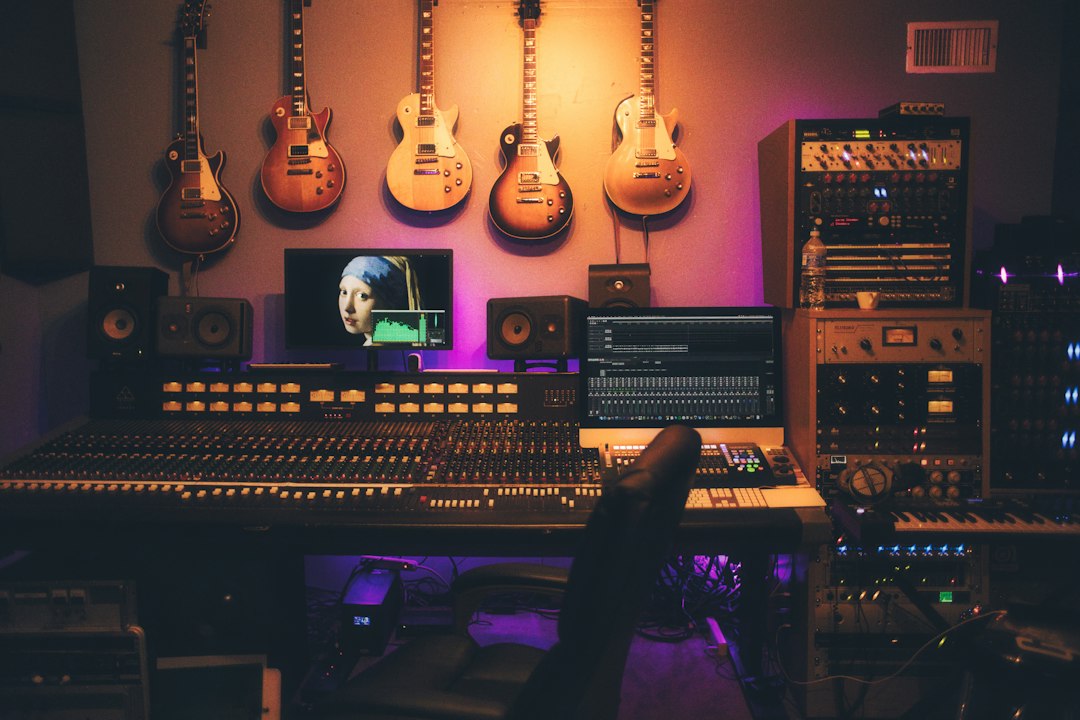
Credits can turn a hunch into a documented connection. Check whether the tracks share a producer, mixer, engineer, studio, mastering engineer or sample source. But keep the inference proportional: one shared collaborator may explain a specific sound without making the artists broadly similar.
3. Songwriting beneath the recording
Strip away the surface mentally. Compare melodic contour, phrase length, chord rhythm, harmonic motion, hook placement, verse length, repetition and lyrical point of view. A simple test is to imagine both songs played by the same singer on one instrument. Would the resemblance survive?
Separate a common device from an unusual combination. Repeating a four-chord loop is widespread. A more specific pattern—such as a descending vocal sequence over a static bass note followed by the same structural lift—deserves closer description. Similarity becomes more informative as the observation becomes more precise.
4. Voice, phrasing and performance behavior
Vocal tone is only one part of an artist’s identity. Listen for register, attack, breathiness, vibrato speed, consonant emphasis, melisma, rhythmic placement, harmony stacking, spoken-versus-sung balance and ad-lib behavior. Two voices can have different timbres yet feel related because they shape phrases the same way.

Use neutral, observable language. “Both singers enter phrases slightly behind the beat and end lines with a narrow vibrato” is more defensible than “Artist B copied Artist A’s voice.” The first is analysis; the second is a historical or legal claim requiring evidence.
5. Instrumentation and arrangement
List what you actually hear. Include acoustic and electronic instruments, percussion sources, doubled parts, background vocals, samples and prominent effects. Then compare how those elements enter and leave. Arrangement is the time-based design of the recording: a muted guitar may be common, but using it alone in the verse and widening it into stacked octaves at the hook is more distinctive.
Pay attention to negative space. Sparse records can feel similar because they leave the same frequency ranges and rhythmic gaps open. Dense records may resemble one another through orchestration, counterlines or the way layers accumulate toward a chorus.
6. Era, technology and format
Recording tools create period fingerprints. Drum machines, synthesizer presets, guitar processors, sampling limits, vocal tuning, loudness practices and playback formats all influence the finished sound. Two artists from the same period can resemble one another without a direct relationship because they were responding to the same available tools and commercial expectations.
A revivalist may intentionally reference an earlier production language. Describe the audible link, then look for an interview or production note before calling it homage. Also account for remasters and remixes: a later presentation can make an older recording sound closer to contemporary work than its original issue did.
7. Scene, geography and collaborator networks
Scenes form through people and institutions: studios, clubs, radio, labels, engineers, session players, producers and peer groups. Shared geography alone is weak evidence. A documented network is stronger. Trace credits and contemporaneous reporting to see whether the artists used the same rooms, personnel or local infrastructure.
This is where a credit trail becomes valuable. The site’s guide to following producer credits across songs and albums shows how to move from an audible production resemblance to a checkable collaborator history.
A seven-axis artist-similarity worksheet
Score each axis from 0 to 3: 0 means little meaningful overlap, 1 means a broad resemblance, 2 means several specific shared traits, and 3 means a strong, repeatable match across representative tracks. The score is a listening aid, not scientific proof.
| Axis | What to compare | Score 0–3 | Evidence note |
|---|---|---|---|
| Genre/rhythm | Groove, subdivision, tempo behavior, form | Name the recurring pattern. | |
| Production | Drums, space, dynamics, effects, stereo field | Separate credit facts from impressions. | |
| Songwriting | Melody, harmony, hooks, structure, lyrics | Would it survive a stripped arrangement? | |
| Voice/performance | Register, attack, timing, vibrato, ad-libs | Describe behavior, not identity. | |
| Instrumentation | Sound sources, orchestration, arrangement | Note when layers enter and leave. | |
| Era/technology | Tools, formats, mastering and period conventions | Check original release and version. | |
| Scene/network | Studios, labels, collaborators, local context | Link to verifiable credits or reporting. |
Do not collapse the worksheet into one unexplained total. A 12 built almost entirely from production and era means something different from a 12 spread across songwriting, voice and rhythm. The profile is the insight.
How to write a fair “sounds like” recommendation
Lead with the listener benefit, then name two or three specific dimensions. Add a contrast so the recommendation does not erase the artists’ differences.
Useful pattern: “Listeners who like Artist A’s [specific rhythmic or production trait] may hear a connection in Artist B’s [specific track or period]. Artist B differs in [songwriting, vocal or historical distinction], so start with [representative track].”
Avoid ranking identity, authenticity or originality from a short resemblance. Artists can share a vocabulary and use it toward different emotional, cultural and compositional ends.
Common comparison mistakes
- One-song matching: a crossover single may not represent an artist’s catalog.
- Loudness bias: the louder master can seem more detailed or powerful.
- Genre as proof: shared conventions are not a documented relationship.
- Credit overreach: one common producer does not explain every similarity.
- Timeline neglect: compare release and recording dates before implying direction of influence.
- Version confusion: a remix, remaster or live arrangement may create the perceived match.
- Difference blindness: a good recommendation explains the boundary as well as the overlap.
Frequently asked questions
Does sounding similar mean one artist influenced the other?
No. Similarity can come from genre conventions, a shared era, common tools, collaborator networks or coincidence. Influence should be supported by direct statements, reliable interviews or other documented history.
Can two artists be similar if their voices sound different?
Yes. Their songwriting, groove, arrangement or production may align even when their vocal timbres do not. Compare dimensions separately.
How many songs should I compare?
Start with two or three representative studio recordings from each artist, ideally from the periods being compared. Expand the sample if one track appears to be an outlier.
Is a shared producer enough to call artists similar?
It is evidence of a factual collaborator link, not proof of broad artistic similarity. Identify which production choices recur and whether the songwriting or performance also aligns.
Is musical style protected by copyright?
This guide does not offer legal conclusions. The U.S. Copyright Office explains that copyright does not protect ideas, concepts, systems or methods as such, while specific original expression may be protected. A resemblance analysis is not an infringement test; consult qualified counsel for a real dispute.
Sources and methodology notes
- MusicBrainz — relationships and documented entity links.
- MusicBrainz — relationship style guidance.
- U.S. Copyright Office — copyright protection FAQ.
- U.S. Copyright Office Circular 33 — Works Not Protected by Copyright.
Editorial note: This article separates documented credits from listening judgments and does not make claims about copying or infringement. NO_COMMERCIAL_EDITORIAL_FIT: equipment links were removed because they did not help readers perform the comparison. NO_VIDEO_EDITORIAL_FIT: no single video can demonstrate the method without narrowing it to unrelated specific artists.