

Finding one song you love can open a much larger listening trail—if you follow the people credited with making the recording, not only the artist whose name is on the cover. A producer may connect an album cut to a single for another artist, an earlier regional scene, or a later generation that borrowed the same production idea. The useful part is not collecting names. It is learning how to verify what each person actually did, then using that evidence to decide what to hear next.
This guide gives you a repeatable way to follow a music producer across songs, albums and artists without collapsing production, songwriting, engineering and executive supervision into one vague credit. It also shows how to handle remixes, aliases, incomplete streaming metadata and conflicting databases—the places where a casual search most often goes wrong.
Start with the right object: recording, composition or release?
Before searching a producer’s name, identify what you are trying to trace. A recording is a particular captured performance: the studio master, live version, remix or re-recording you can hear. A composition—often called a work in music databases—is the underlying song written by composers and lyricists. A release is the package that delivers recordings to listeners, such as a single, album, deluxe edition or compilation.
Those layers overlap, but their credits are not interchangeable. A producer is generally credited on the recording; a songwriter is credited on the composition; an executive producer may oversee an album-level project without producing every track. MusicBrainz’s own relationship guidelines favor placing credits on the most specific known entity—recording or work rather than only the release—because that is what keeps one role from being copied inaccurately across an entire album.
| Layer | Question it answers | What to record |
|---|---|---|
| Recording | Who worked on this exact version? | Mix/version, producer role, release date, recording identifier when available |
| Composition | Who wrote the underlying song? | Writers, publishers and work identifier |
| Release | Where was the recording issued? | Album/single title, label, catalog number, edition and territory |
Step 1: lock the exact version before copying any credit
Write down the artist, track title, release title and version label exactly as shown. “Album version,” “radio edit,” “remix,” “live,” “remastered” and “re-recorded” are not decorative subtitles. They may point to different recordings with different producers and engineers. If your service exposes an ISRC, save it; that identifier can help distinguish recordings that share a title.
Then check the release date and label. A compilation may reuse an older master while displaying the compilation’s newer date. A deluxe edition may combine original recordings with later bonus material. When dates conflict, the earliest commercial issue of the exact recording is usually more informative than the date of the page you happen to be viewing.
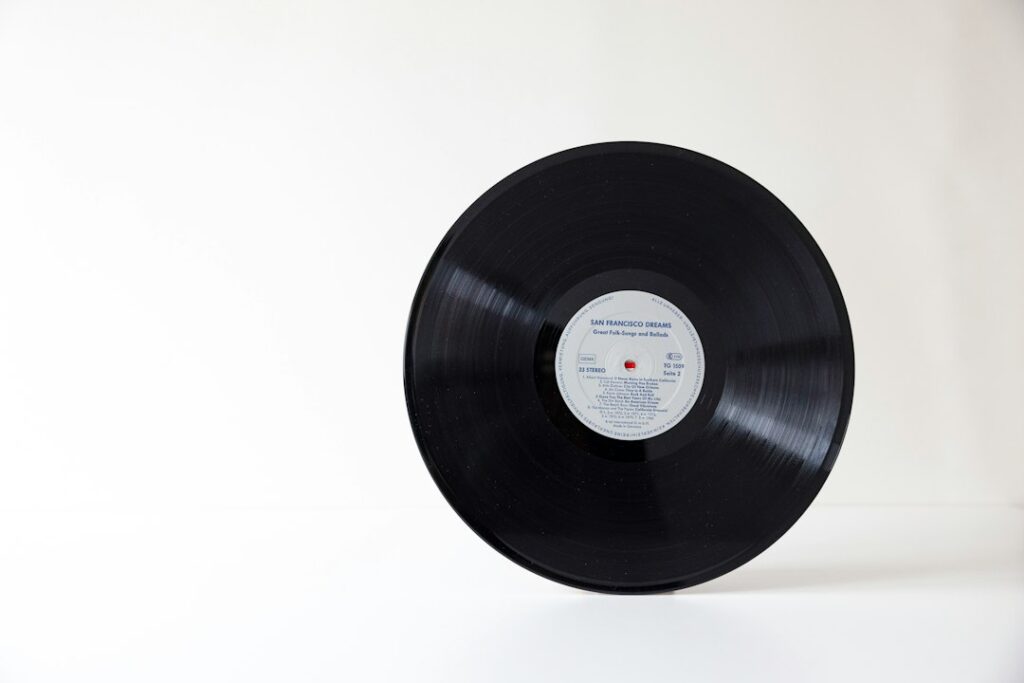
Physical liner notes remain valuable because they preserve the context that a compact streaming interface may flatten: track-by-track roles, studio locations, assistant engineers, sample acknowledgments and separate executive credits. Photograph the relevant panel or transcribe it carefully, including qualifiers such as “additional production” or “co-produced by.”
Step 2: copy the role language, not just the name
The fastest way to build a misleading producer map is to copy every nearby name into a single “producer” column. Credits describe different responsibilities, and the wording matters. Treat the role printed by the source as data. You can normalize spelling later, but do not upgrade “additional production” to sole production or turn an executive album credit into a track credit.
| Credit wording | What it usually signals | Safe way to log it |
|---|---|---|
| Produced by | Primary production responsibility for the recording | Producer |
| Co-produced by | Shared production responsibility | Co-producer; retain all credited names |
| Additional production | Added production work, not necessarily primary authorship of the track | Additional producer |
| Executive producer | Project-level creative or business oversight | Executive producer at the stated release level |
| Mixed by / engineered by | Technical roles affecting the sound but distinct from production | Mixing or engineering; do not silently relabel |
| Written by | Composition credit | Songwriter; keep separate from recording production |
One person can legitimately hold several roles on the same track. Record each one. That detail becomes useful later: a producer who also writes may leave a different kind of trail from one who primarily arranges sessions, programs drums or shapes final recordings with artists.
Step 3: verify the credit with a confidence ladder
No single database is complete, so use a confidence ladder rather than treating the first search result as final. Begin with the most direct evidence available, then use structured databases to expand the trail.
- Primary release evidence: liner notes, an official digital booklet, a label credit page or an artist-approved release page.
- Distributor-supplied platform metadata: Spotify says the credits it displays are delivered by labels and distributors. That makes the platform useful, but an omission is not proof that a person was uninvolved.
- Structured music databases: MusicBrainz is especially useful for moving between artists, recordings, works and releases while retaining the relationship type.
- Reputable interviews and trade reporting: use these to add process and context, not to overwrite a formal credit without explaining the conflict.
- Unsourced lists and social posts: leads only. Verify before adding them to your map.
If two sources disagree, keep both claims in your notes and label the conflict. Check whether they describe different versions, territories or credit levels. A platform may list a producer for one track while an album booklet lists an executive producer for the whole release; both can be accurate because they answer different questions. If the conflict remains unresolved, say so instead of choosing the more convenient answer.
Step 4: pivot from one verified credit to a producer map
Once one recording is verified, search the producer as a credited artist or relationship—not only as a text string. Open the producer’s MusicBrainz artist page when available, follow recording and release relationships, and compare those results with the label or platform data for each candidate track. This prevents a search engine snippet from becoming your evidence.
Build the map in passes. First collect the producer’s work with the same artist. Next add collaborations from the same period and label network. Finally, move outward by year and genre. This sequence preserves context: you can see whether the producer developed a sustained artist partnership, contributed one track to many albums, or moved between scenes over time.
A simple spreadsheet is enough. Give each row one exact recording and include columns for primary artist, track, version, release, release year, label, production wording, other roles, source link and confidence. Add notes only after the factual fields are filled. That separation keeps your listening impressions from being mistaken for formal credit evidence.
Step 5: measure scope before judging influence
A producer credited on one song did not necessarily define an entire album. Count the scope. Was the person responsible for one track, a run of tracks, most of the record or only an executive role? On multi-producer albums, track-level counting reveals partnerships and contrasts that the album’s headline credits can hide.
Use four useful groupings: single-track appearance, recurring album collaborator, album-level lead producer and project oversight. These are analytical labels, not replacements for the printed credit. They help you compare projects while preserving the source wording underneath.
For a concrete example of what a verified timeline can reveal, PCMusicMax’s Larry Smith production timeline follows credited work across artists and years rather than reducing his legacy to one famous record. The method is transferable: verify each recording first, then examine the pattern created by the sequence.
Step 6: listen after the verification pass
Credits tell you where to listen; they do not automatically explain what you hear. After the factual pass, compare recordings at a similar loudness and focus on decisions rather than vague “vibes.” Listen for drum programming, bass placement, arrangement density, transitions, sample treatment, synthesizer or instrument choices, vocal space and the balance between repetition and change.
Phrase observations cautiously. “These three credited recordings use similarly sparse verses and denser choruses” is supportable. “The producer invented this sound” demands broader historical evidence. Similarity can come from the artist, engineer, mixer, session players, shared technology or a wider scene. Producer-following becomes more interesting when it makes those collaborators visible instead of assigning every audible decision to one person.
Disclosure: PCMusicMax and GearReady are affiliated properties. If studying credits is helping you plan your own recording workflow, use GearReady’s home studio gear collection as a practical next step. Start with the input, monitoring and workflow needs you identified from the recordings; do not buy equipment merely because a favorite producer used a particular brand.
Handle aliases, groups and identical names deliberately
Names are not stable identifiers. A producer may use a legal name, stage name, initials, a production-team credit or several spellings across decades. Conversely, two unrelated people may share the same name. Before merging records, compare location, active years, known collaborators, label connections and the source’s artist identifier.
Keep an alias table with four fields: displayed credit, normalized person or group, evidence linking the names and any unresolved ambiguity. Do not split a production duo into individual credits unless the source does. Do not merge a person and a similarly named group merely because a database search places them together. Structured identifiers from MusicBrainz or a label catalog are more dependable than name matching alone.
A 15-minute producer-tracing workflow
For everyday discovery, you do not need to build a complete discography. Use this compact workflow:
- Choose one exact recording and note its version, release and date.
- Open the platform credits, then look for liner notes or an official label source.
- Copy the precise production role and separate it from writing, mixing and engineering.
- Open the credited producer in MusicBrainz and shortlist three recordings from different artists or years.
- Verify each shortlist item with a second source before adding it.
- Listen in release order and write one specific observation per recording.
- Save unresolved conflicts instead of forcing a conclusion.
That small trail is usually more rewarding than an algorithmic playlist because every transition has an intelligible reason. To see how production ideas can travel beyond one person, continue with our guide to the production lineage from reggae and dub to hip-hop. For another kind of evidence chain, the history of the Amen break shows why composition, recording and later reuse must be kept distinct.
Common mistakes that break a credit trail
- Assuming a whole album has one producer: verify track-level credits before generalizing.
- Following the song title without the version: remixes, live recordings and re-recordings may have different personnel.
- Treating missing platform data as a negative fact: metadata can be incomplete or supplied differently by labels and distributors.
- Equating songwriting with production: both matter, but they describe different relationships to the music.
- Using sonic resemblance as proof: listening creates a hypothesis; credits and documented testimony test it.
- Ignoring conflict: a clearly labeled uncertainty is more useful than a neat but unsupported answer.
The payoff is a better way to hear connections
Following producer credits changes music discovery from passive recommendation into investigation. You learn which relationships lasted, which collaborations were one-offs, how a producer’s role changed over time and where other specialists shaped the finished recording. The result is not only a longer playlist. It is a more accurate account of how records are made.
Start with one song, verify one exact credit and follow three well-sourced connections. If the trail holds, expand it. If it breaks, document why. That habit—specific version, precise role, strong source, careful listening—is the difference between a credible production map and a list of names copied from search results.
Sources and further verification
- MusicBrainz relationship style guidelines and relationship editor guidance
- Spotify for Artists: song credits
- Spotify developer documentation: metadata
Editorial note: This article explains a research method. Credits can be corrected after release, so recheck primary sources when accuracy matters.