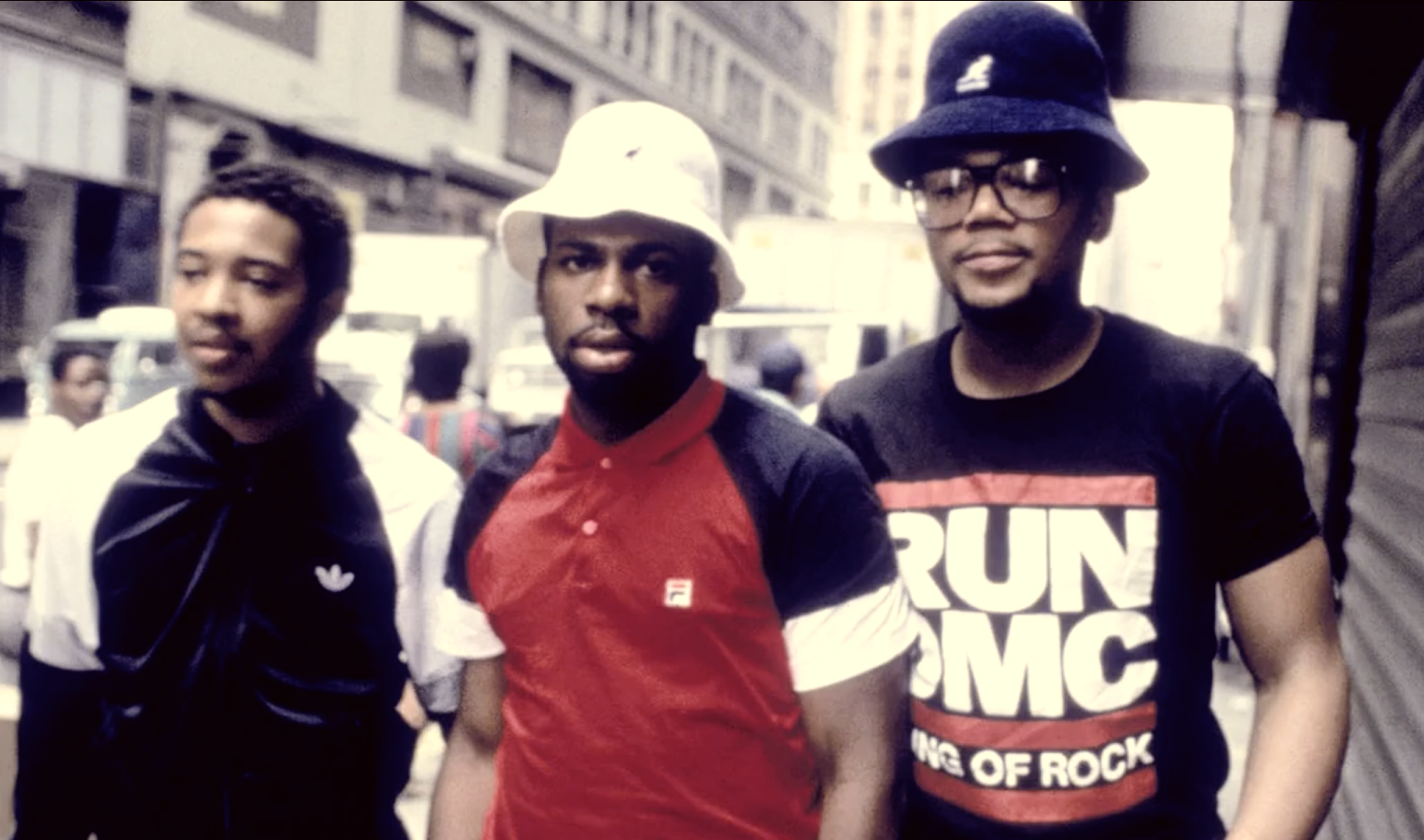
Run-D.M.C. changed rap’s scale without abandoning the elements that made the group sound immediate: two forceful MCs, a visible DJ, hard drums and arrangements with very little excess. Between the 1983 debut single “It’s Like That” and the 1986 album Raising Hell, the Hollis, Queens trio helped move hip-hop from singles and local show circuits toward album careers, national touring, MTV rotation and arena audiences.
That growth was not one sudden crossover. It came through a sequence of choices: Larry Smith’s lean early production, Run and DMC’s tightly coordinated vocal routines, Jam Master Jay’s turntable role, “Rock Box” testing rap’s border with rock, and Rick Rubin’s later work on Raising Hell. Looking at those stages separately shows how the group expanded hip-hop’s audience while keeping a recognizable identity.
“It’s Like That” made space part of the sound
Run-D.M.C.’s debut single paired “It’s Like That” with “Sucker M.C.’s” in 1983. The records sounded unusually bare next to rap releases built around fuller disco or funk arrangements. The drums, bass and voices were exposed, so every rhythmic decision carried more weight.
In a retrospective interview, Darryl “DMC” McDaniels explained that the group wanted recorded songs to retain the direct energy of park jams and show tapes. Producer Larry Smith supplied the musical discipline that turned that idea into records built for radio. The result was not simply “less music.” It was a different hierarchy: the beat and the MCs were the main event.
For readers building beat-centered sets: browse DJ controllers and mixers at GearReady.
Run, DMC and Jam Master Jay worked as a unit
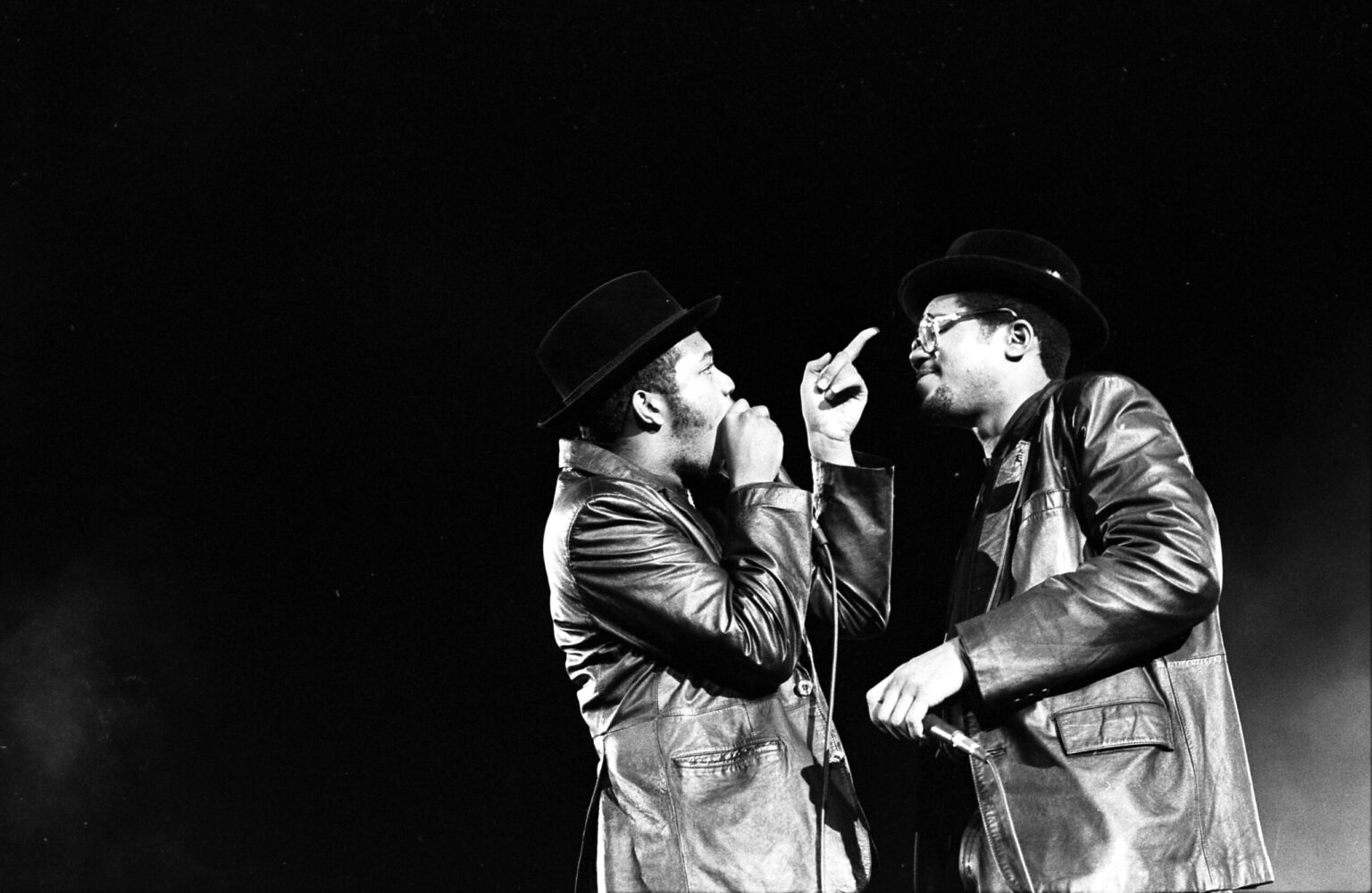
Joseph “Run” Simmons and Darryl McDaniels did not perform like two unrelated soloists sharing a record. They traded lines, completed phrases and changed emphasis through contrast. That handoff style made the duo sound conversational and percussive at once.
Jason “Jam Master Jay” Mizell completed the stage identity. DMC’s account of the group’s formation describes Jay as a DJ who could connect older party records with the newer techniques of hip-hop’s pioneers. His presence also kept the turntable visible as the group’s recordings became more studio-focused and its audiences grew.
“Rock Box” widened the border before the biggest crossover
“Rock Box” is important because it predates the much more famous Aerosmith collaboration. The track used hard guitar without turning the MCs into guests on a rock record. Its center of gravity remained the drum pattern and the vocal routine.
DMC credited Larry Smith with shaping the track after the group recorded its rhymes. Smith added musical structure, including places where the arrangement could breathe, while guitarist Eddie Martinez supplied the prominent guitar part. The video’s MTV exposure showed that rap could enter a rock-oriented television space without softening its delivery.
The first album proved rap could sustain an album and a tour
The group’s self-titled debut arrived in 1984. The Rock & Roll Hall of Fame’s induction essay describes it as evidence that rap could work as an album format with a touring base, not only as a run of isolated singles. That distinction mattered economically as well as artistically.
An album gave the group a larger performance repertoire and a durable catalog. Touring then reinforced the records: DMC recalled a progression from skating rinks to theaters and larger venues as the early singles accumulated. The group’s growth came from repeating and strengthening a format, not from discarding its original sound.
Larry Smith and Rick Rubin represent different stages
The production story is often flattened into a single crossover narrative. The early records and the later breakthrough need separate credit. Smith, working with Russell Simmons on the debut era, helped establish the hard, spacious sound of “It’s Like That,” “Sucker M.C.’s” and “Rock Box.” Rubin’s work on Raising Hell pushed that established identity into a larger pop and rock marketplace.
| Stage | Production emphasis | What changed |
|---|---|---|
| 1983–1984 debut era | Larry Smith and Russell Simmons; beat-led arrangements and radio structure | Park-jam energy became concise commercial records |
| 1984 “Rock Box” | Smith’s arrangement with Eddie Martinez’s guitar | Rap entered rock-video space while the MC/DJ format stayed intact |
| 1986 Raising Hell | Rick Rubin’s larger, sharper crossover frame | The same group identity reached pop radio, MTV and multiplatinum scale |
This is evolution, not replacement. Raising Hell makes more sense when heard as an enlargement of a vocabulary the group had already developed.
Raising Hell turned accumulated momentum into scale
Released in 1986, Raising Hell became the group’s commercial and cultural breakthrough. The Library of Congress added the album to the National Recording Registry and its accompanying essay notes that it was the first rap album to reach triple-platinum status and the first to top Billboard’s R&B albums chart.
The album also demonstrated range inside a coherent identity. “Peter Piper” foregrounded the two-MC exchange and Jam Master Jay’s DJ role. “It’s Tricky” built a tightly organized hook. “My Adidas” converted everyday style into a statement about group identity. “Walk This Way” created the most visible bridge to a rock audience.
Shopping links may support PCMusicMax at no extra cost to you.
For arranging and recording ideas: browse home-studio gear at GearReady.
“Walk This Way” worked because the collaboration was legible
The Aerosmith remake did not ask listeners to decode an abstract genre experiment. The song’s guitar riff, traded vocals and wall-breaking video gave the collaboration an immediate visual and musical structure. According to the Library of Congress essay, the single reached No. 4 on the Billboard Hot 100, then the highest position for a rap record.
The partnership also benefited both sides. It introduced many rock listeners to Run-D.M.C. while helping return Aerosmith to the center of pop culture. Yet the record was not the beginning of Run-D.M.C.’s rock connection; “Rock Box” had already shown how guitar could function inside the group’s beat-led approach.
“My Adidas” linked audience behavior, style and business
Run-D.M.C.’s clothes were part of the group’s credibility because they resembled what the members wore away from the stage. The Rock Hall documents the Madison Square Garden moment when fans raised their Adidas sneakers, giving a company executive direct evidence of the group’s cultural reach. The endorsement that followed was described as the first major deal of its kind for hip-hop artists.
The deeper change was not simply celebrity merchandise. The group demonstrated that a hip-hop audience’s style choices could carry measurable commercial value. Artist identity, fan participation and brand partnership became connected in a way that later generations would treat as normal.
How to hear the progression without skipping the early work
- Begin with “It’s Like That” and “Sucker M.C.’s” for the stripped-down beat and vocal handoffs.
- Use “Rock Box” to hear Larry Smith’s arrangement open a rock-facing door before 1986.
- Listen to “Peter Piper” for the MC/DJ relationship at its most concentrated.
- Compare “My Adidas” with “Walk This Way”: one turns group style into business; the other turns collaboration into mass-media spectacle.
- Return to the debut after Raising Hell. The later scale is easier to understand once the earlier production grammar is clear.
For a deeper producer timeline, read PCMusicMax’s Larry Smith production history. For the wider live-to-record transition, see how Grandmaster Flash and the Furious Five moved early hip-hop technique into records.
Why the change lasted
Run-D.M.C. expanded rap’s commercial possibilities without treating crossover as a request to become less specific. The voices remained blunt, the drums remained central, the DJ remained visible and the clothes remained tied to the group’s own environment. What changed was the size of the system around those choices: albums, touring, television, brand relationships and international audiences.
That is why the path from “It’s Like That” to Raising Hell still matters. It is a case study in scale built from a stable artistic identity, with distinct production eras that deserve to be heard on their own terms.
Sources and research notes
- Rock & Roll Hall of Fame — Run-D.M.C. induction history and artifacts
- Rock & Roll Hall of Fame — 2009 induction essay
- Library of Congress — National Recording Registry essay on Raising Hell
- GRAMMY — Run-D.M.C. career context
- Okayplayer — Darryl McDaniels on the debut album’s production
- Wikimedia Commons / UCLA Library — 1984 Long Beach performance image and license