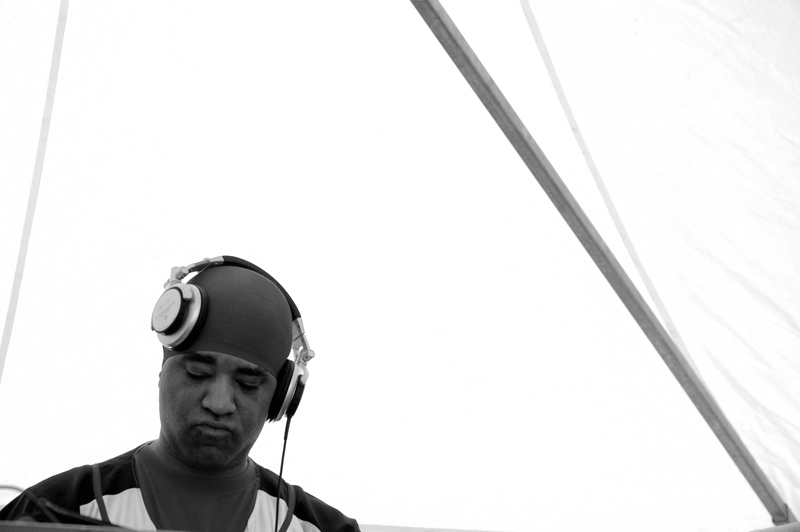
Marley Marl belongs in any serious discussion of how hip-hop production became its own technical craft. His importance is not just a list of records. It is the way he connected DJ thinking, engineering, sampling and a home-studio mindset at a moment when rap production was still inventing its basic language.
In his 2014 Red Bull Music Academy interview, Marley describes moving from DJ to engineer and producer, learning around Unique Recording, and experimenting with early sampled drum sounds. He recalls accidentally capturing a snare while trying to sample another sound and realizing it could be triggered against another rhythm. This is his own origin story of a production breakthrough—not proof that no earlier musician had ever sampled a drum.
Before sampling became routine, drum sounds were a discovery
Marley’s account is valuable because it shows how primitive the workflow was compared with modern beatmaking. He describes working with very short sample times and saving favorite drum sounds on reel-to-reel tape because the hardware could not simply recall everything later.
That limitation encouraged a different kind of discipline. A kick, snare and hi-hat were not unlimited library choices. They were carefully chosen building blocks that had to survive the session.
Shopping links may support PCMusicMax at no extra cost to you.
Explore sample-based production: browse audio samplers on Amazon.
From DJ logic to producer logic
Marley repeatedly frames his early production as an extension of being a DJ. He was already thinking about which parts of records made people react, how breaks could be extended and how rhythm could be reorganized.
Sampling let him move that logic from two turntables into the studio. Instead of replaying an entire groove with session musicians, he could capture small pieces and build a new rhythmic identity around them.
The sampled snare becomes a production signature
One of the most important ideas in Marley’s story is that a producer can create a reusable sonic vocabulary. Once he began sampling drum hits, the kick and snare themselves became design choices.
That shift helped make hip-hop production less dependent on recreating a band performance and more dependent on editing, triggering and arranging recorded sound. The producer was no longer merely supervising musicians. The producer could construct the rhythm at the level of individual hits.
Listen: Biz Markie — “Make the Music with Your Mouth, Biz”
Marley’s production gives Biz’s deliberately unusual vocal percussion and rapping a structured rhythmic foundation. Listen for the piano figure, accented drums and interplay between recorded sound and mouth-made rhythm. REVOLT identifies elements of Isaac Hayes’s “Ike’s Mood I” and the Honey Drippers’ drums in its production analysis.
Explore modern creator gear: browse Home Studio Gear at GearReady.
Queensbridge becomes a production laboratory
Marley describes building a home studio in Queensbridge and making records with limited tracks and inexpensive samplers. That matters because it shows an early version of the decentralized production model that later became normal: powerful records could be assembled outside a major commercial studio if the producer understood signal flow, timing and arrangement.
Constraint became part of the sound. With only a few recording tracks available, every part had to justify its place.
Listen: MC Shan — “The Bridge” (1986)
Play the original recording and pay attention to the compact drum groove: the placement of the snare, the repeated rhythmic cells and how much space remains for Shan’s voice. A listening test is stronger than a generic claim about “raw” production. As REVOLT’s Marley Marl retrospective notes, the track reworked drums from the Honey Drippers’ “Impeach the President.”
The Juice Crew turns production into a network
Marley’s role expanded beyond isolated records through the Juice Crew. The collective connected MC Shan, Roxanne Shanté, Biz Markie, Big Daddy Kane, Kool G Rap, Masta Ace, Craig G and others around a shared radio, label and production ecosystem.
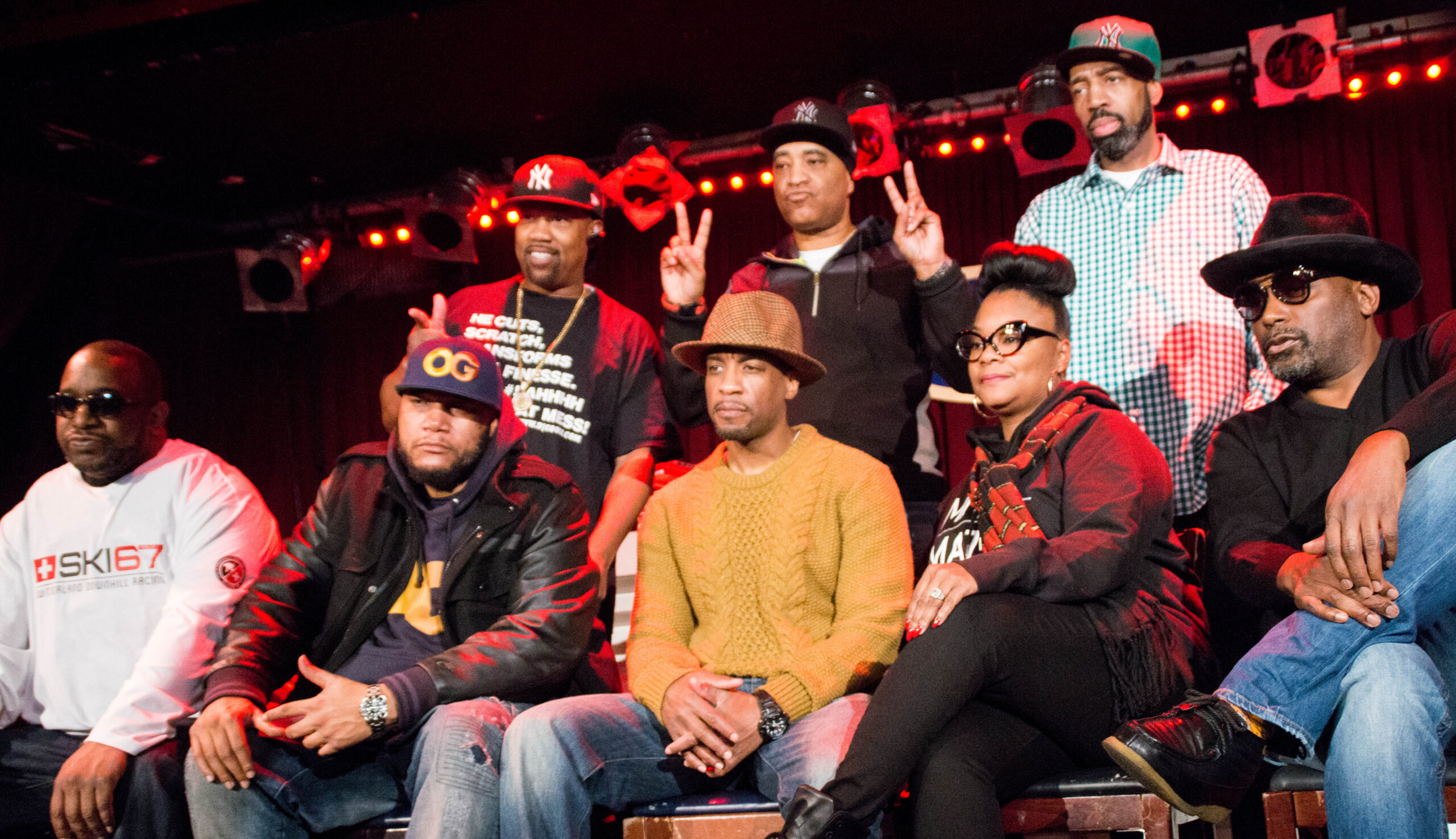
That is exactly why producer-led discovery works so well. Follow Marley Marl and you do not reach one artist—you reach an entire branch of late-1980s hip-hop.
Explore recording hardware: browse computer recording equipment on Amazon.
“The Symphony” shows the network at full strength
“The Symphony” is one of the clearest ways to hear the Juice Crew idea in concentrated form. Multiple MCs occupy the same record while Marley’s production provides the common floor beneath different voices and techniques.
The record also demonstrates why posse cuts matter historically: they let listeners compare MCs inside one production environment rather than across unrelated records.
The four featured rappers are Craig G, Masta Ace, Kool G Rap and Big Daddy Kane. Rather than treating the entire Juice Crew as performers on this one recording, compare how those four voices use the same musical framework. REVOLT identifies an Otis Redding “Hard to Handle” riff in its account of the beat.
Marley Marl’s influence is partly technical and partly organizational
It is easy to focus only on sampling, but Marley also helped establish the producer as a central connector between artists. He moved among radio, engineering, label work and production, helping records circulate through a recognizable scene.
That role resembles what later super-producers would do: create a sound, build relationships, introduce artists to one another and turn production credits into a map of a movement.
How to study Marley Marl today
Three-track listening laboratory
| Recording | What it demonstrates |
|---|---|
| MC Shan — “The Bridge” | Focused drum placement; repetition and vocal space |
| Biz Markie — “Make the Music with Your Mouth, Biz” | Sampled rhythm in dialogue with a distinctive vocalist |
| Juice Crew — “The Symphony” | Four MCs sharing one producer-controlled rhythmic setting |
- Start with the drum sound before the sample source.
- Compare early MC Shan records with later Juice Crew productions.
- Listen for how sampled drums change the weight of the groove.
- Follow the producer credit outward to Big Daddy Kane, Kool G Rap and LL Cool J.
- Separate the technical innovation from later myths about who “invented” sampling as a whole.
For the broader method, use PCMusicMax’s producer-credit guide. Marley Marl is one of the best case studies for seeing a producer become an entire discovery network. Continue with Pete Rock’s sample-driven New York production, Kurtis Mantronik’s electronic machine funk, and Rakim’s rhythm and rhyme placement.
Sources and research notes
- Red Bull Music Academy — Marley Marl lecture/interview
- REVOLT — 13 Marley Marl beats, with contemporary video references and identified sample components
- Okayplayer — Marley Marl on the Juice Crew and drum sampling
- Wikimedia Commons — Marley Marl performing in Utrecht; Ronald van Holst, CC BY-SA 2.0
- Wikimedia Commons — 2016 Juice Crew reunion; Mary Nichols (DJ Fusion/FuseBox Radio), CC BY-SA 2.5