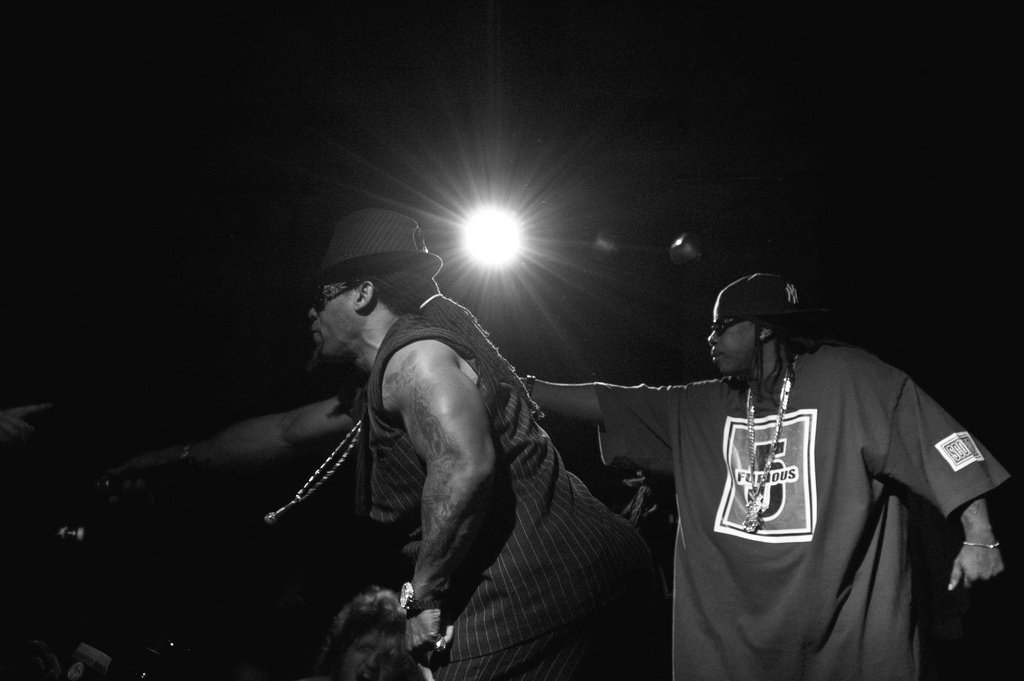
Kurtis Blow’s importance is often compressed into two “firsts”: the first rapper signed to a major label and the first rapper with a gold-certified single. Both milestones matter, but neither fully explains the career model he helped make visible. Blow connected the live credibility of late-1970s New York hip-hop to a national record company, a solo-artist identity, a repeatable catalog and an audience that extended well beyond one neighborhood or one novelty record.
That transition was not inevitable. Record executives were still deciding whether rap was a durable form, and early recordings had to translate the energy of parties and clubs into formats that radio, retailers and touring promoters understood. Blow’s first releases gave the industry evidence that an MC could carry that structure without surrendering the culture’s performance roots.
What Kurtis Blow actually proved
| Career step | What happened | Why it mattered |
|---|---|---|
| Major-label entry | Mercury released “Christmas Rappin’” in 1979. | A major company treated a rapper as a recording artist with follow-up potential. |
| Commercial confirmation | “The Breaks” became rap’s first gold-certified single in 1980. | Rap’s market was measurable, not merely speculative. |
| Solo identity | Blow built releases around one recognizable artist name. | The MC could be the central public identity, not only one member of a crew. |
| Catalog growth | Albums and later singles expanded his subjects and sound. | A rapper could sustain a career beyond a debut hit. |
| Influence network | His orbit included Russell Simmons and a young Joseph “Run” Simmons. | One early career became a bridge to the next phase of rap’s business. |
The story begins before Mercury
Blow came out of a culture built around DJs, MCs, dancers, crews and live competition. His own account, preserved in interviews and reflected in the Smithsonian’s history of “Christmas Rappin’,” places performance at the center: a rapper learned how to command a room before a label could market a record. Russell Simmons promoted Blow, while writers and producers J.B. Moore and Robert Ford helped convert that live appeal into a studio opportunity.
This background matters because Blow was not manufactured to imitate a successful record. He already understood the timing, projection and audience contact of a working MC. The business opportunity arrived when producers and Mercury were willing to test whether that skill could survive on vinyl.
“Christmas Rappin’” turned a seasonal idea into a career opening
Mercury released “Christmas Rappin’” in 1979 after other companies had passed on it. According to the Smithsonian’s detailed production history, the recording combined a holiday premise with an extended party-rap performance. Its instrumental side also gave Blow a practical way to perform live without rapping over his own lead vocal—a small format decision that kept the record connected to the stage.
The single sold more than 350,000 copies, roughly ten times Mercury’s initial goal, the Smithsonian reports. More important than the exact total was what followed: the label exercised its option for another release. Rap had produced a result strong enough to justify a second investment.
“The Breaks” converted momentum into proof
Released in 1980, “The Breaks” reached No. 4 on the R&B chart and No. 87 on the Hot 100, according to the Smithsonian account. It sold more than 850,000 copies and became the first rap recording to receive gold certification. The Museum of Pop Culture preserves Mercury’s 1980 RIAA gold award for the single, giving the milestone an institutional artifact as well as a frequently repeated statistic.
The record’s importance was not simply that it sold. It demonstrated that a rapper could follow a breakthrough with a larger one, support a self-titled album and remain identifiable to the public as an artist. That is the difference between a one-off market event and the beginnings of a career system.
A solo rapper needed a different public structure
Many foundational hip-hop performances centered on a DJ and a crew of several MCs. Blow’s records presented one artist name at the front. That did not erase the producers, musicians, promoters or scene around him; it changed how the public-facing package worked. A label could build artwork, publicity, touring and a catalog around Kurtis Blow as the continuing identity.
This is why “first major-label rapper” should not be treated as a trivia answer. The deal helped establish a pathway later solo MCs could expand: a recognizable name, a sequence of releases, an album, live appearances and a business team capable of moving the work into multiple markets.
The debut album made the wager larger
A hit single can be marketed as a moment. A full album asks listeners and a label to imagine an artist with range. Kurtis Blow, released in 1980, placed “The Breaks” inside a broader debut statement. It also connected the emerging rap-album format to a major-label distribution system that already knew how to service stores, press and radio.
That scale came with tension. The live culture was communal and locally adaptive; a record required fixed performances, formal credits, manufacturing and promotion. Blow’s early catalog sits at that hinge point. It shows an industry learning how to sell rap while artists learned how to use the record business without reducing their music to a passing gimmick.
Later records showed that rap could address more than one setting
Blow did not remain confined to holiday novelty or party records. His later catalog moved through social observation, storytelling, sports and crossover-minded production. “Basketball,” released in 1984, is a clear example of subject expansion: a rap single could organize itself around a mass-cultural passion and still sound like an MC’s record.
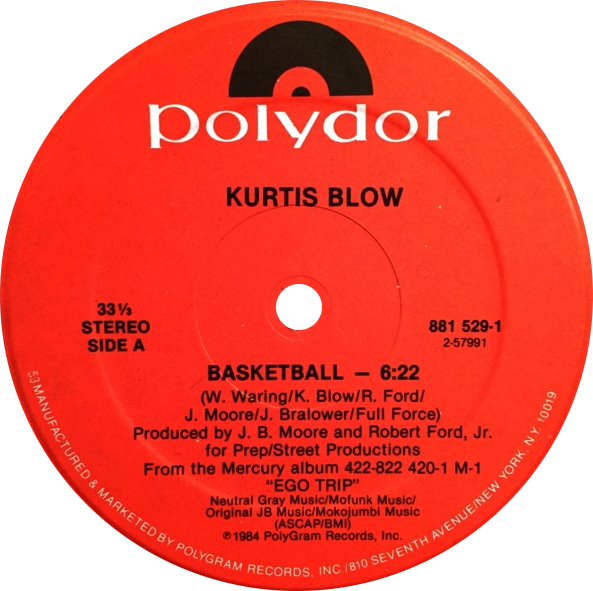
The point is not that topical rap began with this one song. It is that a nationally known rapper could carry familiar subjects into a growing catalog and reach listeners who might encounter hip-hop through radio, film, sports culture or a record store rather than a New York party.
The Russell Simmons and Run-D.M.C. connection reveals the handoff
Blow’s career also mattered through relationships. Russell Simmons was part of his early promotion, and Joseph Simmons performed under the name “Run, the Son of Kurtis Blow” before Run-D.M.C. became a defining group of the next era. GRAMMY’s career histories use that connection to show how credibility and opportunity moved through the scene.
The comparison should not flatten the artists into one lineage. Blow’s major-label solo breakthrough and Run-D.M.C.’s later group identity, harder production and crossover scale belong to different phases. Read together, however, they show how quickly rap’s business infrastructure evolved. PCMusicMax’s Run-D.M.C. history follows that next stage.
Another branch of that history: Blow also helped produce the Fat Boys’ early records, linking his business and studio experience to a younger generation. Compare that group’s unique beatbox tradition in Doug E. Fresh vs. Buffy of the Fat Boys. This is a historical connection, not a claim that those artists staged a formal beatbox battle.
What changed—and what did not
Major-label support expanded manufacturing, promotion and reach, but it did not create hip-hop’s audience from nothing. The audience, techniques and performance standards already existed. Blow’s records were successful because they carried recognizable MC craft into a commercial system at the right moment.
Likewise, his breakthrough did not make every later rap career easy. Labels could misunderstand the culture, contracts could distribute power unevenly, and commercial success could reward a narrow image of what rap should be. Blow’s case is most useful when treated as evidence of possibility, not as a claim that one deal solved the industry’s structural problems.
The real blueprint was repeatability
The durable achievement was a sequence: live reputation led to a record; the record led to a label option; the follow-up led to gold certification; the success supported an album and continuing releases; the public identity supported touring, media appearances and influence on younger artists. Each step made the next one easier to imagine.
That sequence is the blueprint in the title. It is more specific—and more valuable—than a list of firsts. Kurtis Blow helped prove that rap could support not only a hit, but a professional arc with a catalog, a team and a recognizable artist at its center.
Study the records, not just the milestones: If you are mapping early-rap arrangements or planning a listening session, GearReady’s notebooks and journals offer one simple place to track personnel, versions and production details. This is an owned-store link.
Continue exploring early recorded rap
For the commercial-record breakthrough that immediately preceded Blow’s rise, read how “Rapper’s Delight” changed the scale of the rap record. For the live-to-record authorship questions surrounding that transition, continue with PCMusicMax’s Grandmaster Caz history.
Sources and research notes
- Smithsonian Institution — Kurtis Blow career milestones
- Smithsonian Magazine — production, release and sales history of “Christmas Rappin’” and “The Breaks”
- Museum of Pop Culture — 1980 RIAA gold award for “The Breaks”
- GRAMMY — Kurtis Blow oral-history interview and career context
- KurtisBlowVEVO — official “Basketball” video (1984 film)
- uDiscover Music — Kurtis Blow, the Fat Boys and early major-label production
- GRAMMY — Kurtis Blow’s influence and Run-D.M.C. connection
- Wikimedia Commons — featured photograph by alice.lowndes, CC BY 2.0
- Wikimedia Commons — “Basketball” label image rights record