
Electro changed the sound of early-1980s hip-hop by bringing machine-generated percussion and synthesizer arrangements into the center of a dance record. It was not a clean break with funk, disco or the block-party DJ tradition, because producers were already drawing from a remarkably diverse set of records. The transformation was in the texture and construction of the groove: electronic drums could sound proudly artificial rather than pretending to be a live band. Afrika Bambaataa and the Soulsonic Force’s 1982 “Planet Rock” is the best-known turning point in that story. It offered a powerful demonstration of how street-dance rhythm could coexist with melodic ideas from European electronic music.
The artists and producers responsible for the early wave included Arthur Baker, John Robie and a wider network of New York club musicians. Their work influenced many later scenes, but a history should not collapse Detroit techno, Miami bass and every kind of dance music into one linear family tree. Each genre involved additional innovators, local audiences and technologies that deserve their own account. The original records make the connections easier to hear than a simple timeline of product launches. This guide therefore follows specific sounds and production decisions, separating documented influence from broad similarities among electronic genres.
“Planet Rock” made electronic texture central
“Planet Rock” brought the sound of a programmed electronic rhythm into a hip-hop context at a scale few earlier records had achieved. Arthur Baker and John Robie helped realize the production in the studio, with Bambaataa and the Soulsonic Force supplying the concept and vocal identity. The record draws recognizable ideas from Kraftwerk’s “Trans-Europe Express” and “Numbers,” but the result feels like a new dancefloor construction rather than a conventional rock or funk cover. Its drum programming, synthesizer timbres and voices are coordinated around a steady physical pulse. The track’s historical importance lies in that complete new arrangement, not in any claim that it was the first record ever to use a synthesizer.
Play the original recording and listen first to the relationship between the repeating beat and the electronic bass. Then pay attention to how the synthetic tones change the mood before any MC begins a verse. The sparse arrangement leaves individual details unusually exposed, so small changes of sound or accent become important. Compare the recording with an earlier live-band funk single and identify which parts behave like stable programmed patterns rather than flexible instrumental performances. That comparison shows the electro shift more clearly than a description that calls the track futuristic without explaining what it does.
Shopping links may support PCMusicMax at no extra cost to you.
Explore modern creator gear: browse Home Studio Gear at GearReady.
Drum machines turn repetition into design
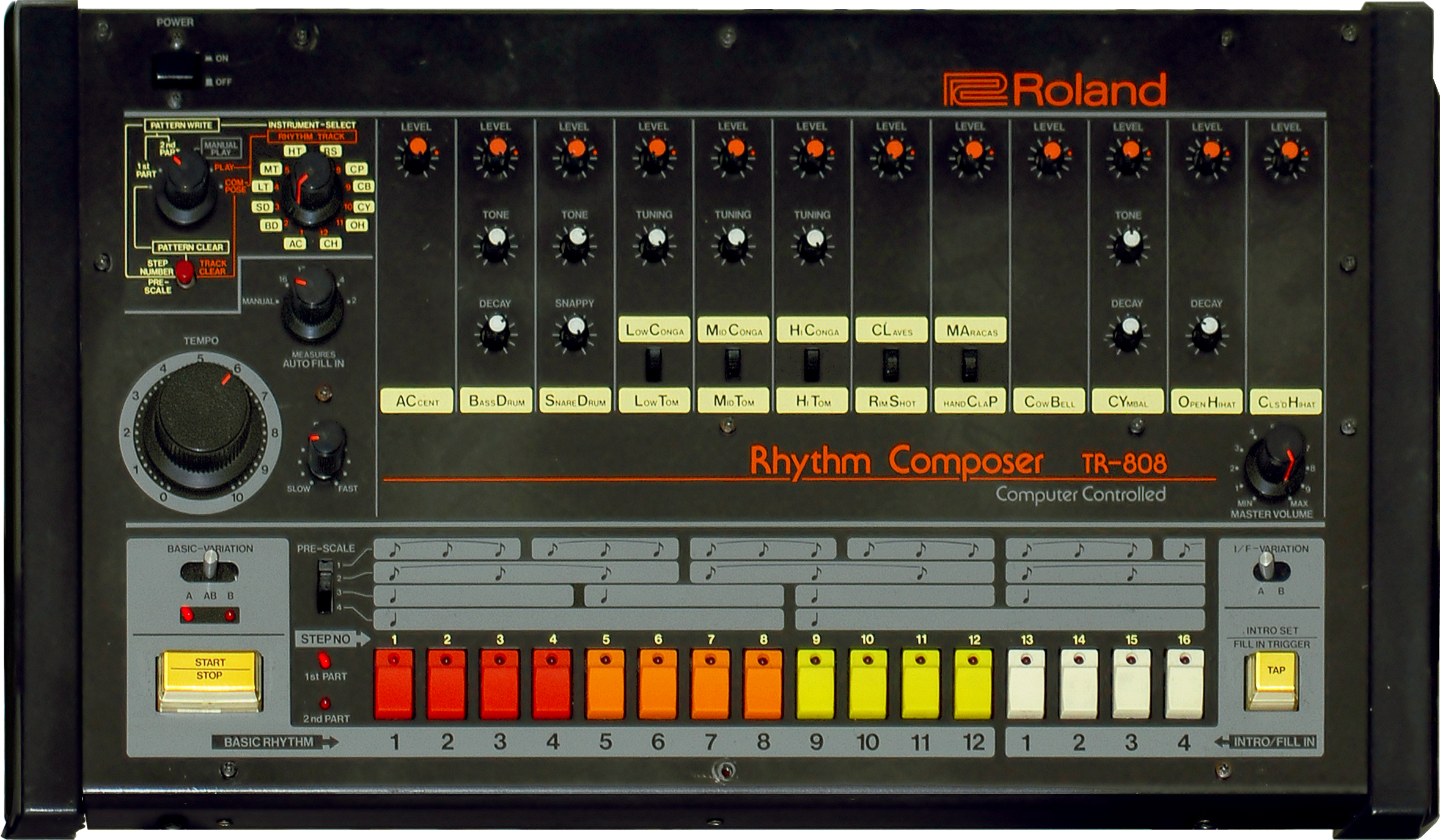
The Roland TR-808 became especially important to electro because it offered a distinctive palette of drum sounds and a way to program repeatable patterns. Its bass drum could sustain a low note that felt very different from a tightly damped acoustic kick. Producers could also place handclaps, cowbells, hi-hats and snare-like sounds with precise spacing. The instrument did not have to reproduce the timing variations of a live drummer to make people dance. In fact, the mechanical repetition became part of the attraction for records built around breakdancing and futuristic themes.
A good listening exercise is to isolate the central kick pattern and decide where the sense of momentum comes from. Often the answer is the relationship between a stable pulse, syncopated claps and shorter percussion accents. Changes can also come from muting or reintroducing a drum voice without rewriting the entire arrangement. Those decisions are compositional choices, not merely settings on a machine. Modern software can imitate a TR-808 timbre, but using an authentic-sounding preset does not automatically recreate the historical arrangement decisions that defined early electro.
Synthesizers move bass and melody into new territory
Synthesizers gave producers access to low bass notes, bright synthetic hooks and gliding sounds that did not behave like a conventional electric bass or horn section. A tone could hold steady for an unnatural length, bend in pitch or carry a sharply shaped electronic attack. These properties helped establish the science-fiction atmosphere associated with important electro releases. They also changed the division of musical labor in the studio, because one keyboard part could provide a new kind of rhythmic or melodic foundation. The appeal was not simply novelty; it was the ability to arrange familiar dance rhythms with sounds that suggested a different future.
Listen to the bass movement separately from the drum machine, and notice whether the bassline follows every kick or creates a counter-pattern. Then focus on the melody and ask how many notes are necessary to give the record its recognizable identity. A small motif can become powerful through timbre, repetition and careful placement. That approach differs from a dense live-band arrangement in which several instruments continuously fill the space. Understanding the distinction helps explain why electro still sounds recognizable even when later producers use updated synthesizers or drum machines.
Explore music-making tools: browse Amazon Best Sellers in Musical Instruments.
The Kraftwerk connection is influence and reconstruction
Kraftwerk’s influence on “Planet Rock” is a documented musical relationship, not just a vague resemblance between two electronic records. The producers drew from “Trans-Europe Express” and “Numbers” while constructing the new track with contemporary studio instruments. Reverb’s historical account and Arthur Baker’s production recollections describe the original creative and technical process. It is important not to call every recognizable borrowed phrase a digital sample, because a replayed or reconstructed part is a different kind of recorded relationship. That distinction matters both musically and when documenting credits.
Listeners should compare the rhythmic pattern from “Numbers” with the arrangement that appears in “Planet Rock.” Next, compare the melodic contour associated with “Trans-Europe Express” and identify what changes in tempo, groove and context. A recognizable source can carry a very different emotional purpose when placed under rap vocals and a new bassline. The finished track also includes additional musical ideas that should not be erased by emphasizing only the Kraftwerk connection. Accurate source mapping requires discussing what was borrowed, what was performed anew and how the result became a distinct recording. For source-to-record comparisons, the original label masters should be checked side by side so that differences in speed or mastering are not confused with changes to the composition.
Electro widened hip-hop’s geographic future
Electro’s production ideas moved through New York dance records and influenced later scenes in other cities. Detroit artists explored their own machine-driven forms, while Florida bass producers developed especially physical low-end arrangements. Connections among these scenes are worth studying, but they should not be described as if every artist learned the same recipe from a single hit. DJs, radio shows, independent labels and dancers helped sounds circulate alongside the equipment itself. “Planet Rock” is a major reference point within that exchange rather than the entire explanation for everything that followed.
A useful method is to choose one representative record from each city or scene and listen for what remains consistent. Look for programmed percussion, synthetic bass and a preference for repeating motifs. Then attend to what changes: tempos, vocal styles, bass emphasis, song structure and dance setting. Similar technology can produce different musical identities when a local audience expects something different from the record. This keeps the history specific without mistaking shared machines for proof of direct influence.
Explore sample-based production: browse audio samplers on Amazon.
Dance and visual culture reinforced the sound
Electro was experienced as dance music, so movement and visual design were not optional decorations to the sound. Breakdancers responded to the precise percussive accents and openings that programmed records could provide. The music’s association with robotic movement, futuristic clothing and electronic imagery reinforced its identity in clubs and on television. Those visual elements helped people recognize the sound before they knew the names of the machines producing it. This was a cultural feedback loop between how music sounded, how dancers moved and how the scene presented itself.
The relationship is easy to overlook if an article relies only on a list of studio equipment. Watch an authentic period dance-performance video while listening to where the musical breakdowns occur. Notice whether a performer emphasizes quick percussion details or stretches movement across a sustained synthetic bass note. The choreography can reveal which parts of the arrangement had the greatest physical impact. Connecting the visuals to the audio gives electro history a much stronger explanation than simply saying that synthesizers sounded like the future.
Why electro belongs in Creator Studio
The original electro records offer a practical lesson for today’s producers: an arrangement can establish a recognizable identity with only a few carefully chosen sounds. A kick, a clap, a synthetic bassline and one memorable hook can create a complete dancefloor idea. The trick is to give each part a clear musical role rather than filling every beat with additional material. Early programmers often worked with tight technical limits and had to make the most of their available sounds. That economy is worth studying even when a modern workstation provides nearly unlimited tracks.
Try building a short pattern using one drum kit and one monophonic bass synthesizer before reaching for more instruments. Change the pattern by muting elements, altering the bass rhythm and shifting a small melodic accent. Listen to how those adjustments affect the dance groove without changing the entire sound palette. Then compare the result with an early electro record and note the differences in timbre and arrangement rather than claiming to have reproduced vintage hardware exactly. The exercise shows how technology can become a style through disciplined composition.
A listening path through the machine shift
Begin with the original “Planet Rock” recording and establish the relationship between beat, bass and vocal phrases. Follow with a Kraftwerk recording such as “Numbers” to identify the specific rhythmic idea that influenced the track. Then compare a New York electro record from the following year with a later Detroit or Miami release. Keep notes on the differences in percussion, tempo, vocal presentation and bass placement. This short sequence will reveal both the shared machinery and the local creative choices that made the styles distinct.
A second pass should include the historic music video where an authentic source is available. The visual language can show why the music worked so well for dancers and television audiences. Avoid treating any recent DJ remix as the original release without checking the title, label and recording date. Use museum or label listings to confirm the original recording before comparing versions. That diligence is especially important for influential dance records whose titles have been reused across dozens of later edits and compilations.
- Start with “Planet Rock” and isolate the programmed drums.
- Listen to the electronic bass and melodic patterns separately.
- Compare the texture with earlier live-band rap records.
- Move into other early electro records and note what becomes a genre convention.
- Then compare electro’s machine logic with Chicago house and Detroit techno.
Continue exploring
The larger music-history network helps explain how electro connects with other genres without reducing their differences. Our disco, house and techno guide compares several dance-music lineages and identifies where their tools and audiences overlap. The recording-relationship guide explains terminology needed to describe borrowed musical material precisely. Both subjects help clarify why the sound of “Planet Rock” can have many descendants without making all of those descendants the same genre. Follow the links for a specific question, not just because the articles share a broad music category.
The electro story also belongs in creator-focused production coverage because a record’s technical history is useful to musicians. A modern producer can apply the principles of negative space, rhythmic contrast and synthetic timbre without copying an earlier artist’s master recording. Historical research supplies context while listening reveals the practical result. Comparing those two forms of evidence protects against myths about a single device inventing an entire style. That combination is the editorial value PCMusicMax should provide beyond the ordinary one-paragraph genre summary.
Sources and research notes
Key source material includes the Museum of Pop Culture’s entry for “Planet Rock”, which verifies the original 1982 release and the people connected with it. Reverb’s history of electro places the record within the contemporary scene and identifies important following releases. Arthur Baker’s own production account provides valuable technical context that retrospective timelines cannot supply by themselves. Those sources are more useful together than any isolated assertion that one producer or machine single-handedly created electro. The original label recording remains the core evidence for all audible claims about its sound.
Historical accounts sometimes differ in how they describe the balance of sampling, interpolation and studio replay in early electronic records. A careful article should attribute a claim to the person or publication making it and distinguish what is plainly audible from what requires session documentation. Technology names can also mislead when a later product is confused with a machine actually used on the original record. Confirming years, studio tools and credits reduces those errors. The goal is a source trail that allows readers to investigate the music for themselves rather than a collection of dramatic but weakly supported first-ever claims.