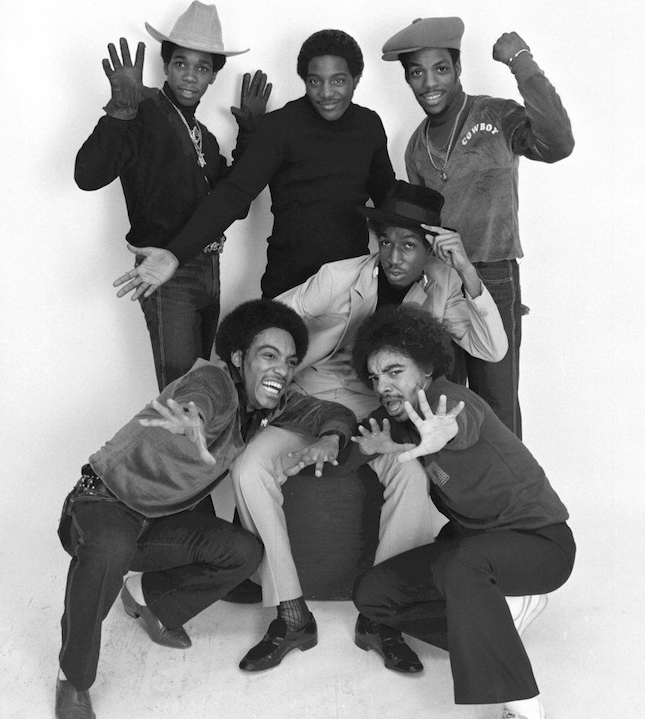
Grandmaster Flash & the Furious Five sit at the point where several parts of early hip-hop become visible at once: the DJ as technician, the MC crew as coordinated stage unit and the rap record as a vehicle for more than party energy.
The Rock & Roll Hall of Fame inducted the group in 2007, making them the first rap group inducted. Its history emphasizes both Flash’s turntable innovation and the way “The Message” expanded the subject matter associated with recorded hip-hop.
The DJ is the engine
Before rap became primarily a recorded vocal genre, the DJ controlled the architecture of the party. Flash refined turntable techniques that allowed breaks to be repeated and manipulated with greater precision.
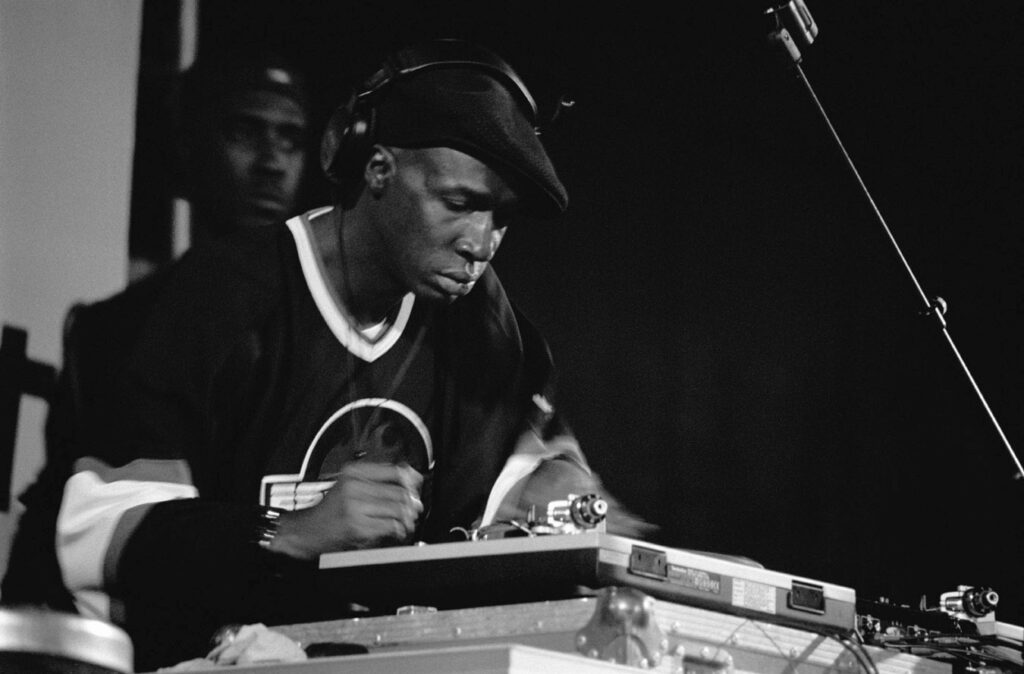
The key point is not that he worked alone. Hip-hop performance was an ecosystem: the DJ controlled records and timing while MCs kept the room engaged, dancers responded and the sound system made the entire exchange physical.
Explore DJ workflow gear: browse DJ Controllers & Mixers at GearReady.
The Furious Five turn MCing into group arrangement
A crew with several MCs creates a different problem from a solo rapper. Entrances, handoffs, call-and-response and stage movement all have to be coordinated.
The Furious Five helped demonstrate that rap performance could be arranged like an ensemble. Individual voices remained distinct, but the group presentation created momentum larger than one MC delivering one verse after another.
Live energy and recorded identity are not identical
One of the most useful historical corrections concerns “The Message.” The record is credited to Grandmaster Flash & the Furious Five, but the Rock Hall’s historical essay notes that the recording itself centers Melle Mel and Duke Bootee rather than functioning as a full-group studio performance.
That distinction matters because group names, performance lineups and exact recording personnel are not always the same thing.
Explore recording hardware: browse computer recording equipment on Amazon.
“The Message” changes what a rap single can carry
The 1982 single became a turning point because its subject matter focused on urban pressure rather than simply party command. GRAMMY’s hip-hop timeline describes the record as evidence that rap could carry stark social observation into the mainstream record market.
The breakthrough was not that serious subjects had never existed in Black music. It was that a commercially visible rap record made those subjects central to the genre’s public identity.
The group’s importance is both musical and structural
Grandmaster Flash & the Furious Five help explain how hip-hop moved from local performance culture toward the recording industry without losing the importance of DJ technique and crew dynamics.
They also show why music history should distinguish the culture from the records. The live practice came first; the records captured only part of it.
Explore music-making tools: browse Amazon Best Sellers in Musical Instruments.
Why “firsts” should be handled carefully
Early hip-hop history is full of competing “first” claims. Some refer to first recordings, some to first commercial successes, some to technical innovations and some to local practices that were not documented at the time.
PCMusicMax therefore uses specific claims: the group was the first rap group inducted into the Rock Hall, and “The Message” is widely documented as a major turning point in recorded rap. Those are narrower and more useful than declaring one act the sole inventor of an entire culture.
How to listen to the group today
- Hear the turntables as an instrument, not background equipment.
- Notice how multiple MCs divide space and create momentum.
- Compare party-oriented recordings with “The Message.”
- Separate the exact studio personnel from the public group name.
- Use the recordings as doors into the earlier live-performance culture.
Continue through the early-rap network
From here, move into Run-D.M.C., whose stripped-down approach changed the scale again, and the Larry Smith production timeline for the producer side of the 1980s transition.
Sources and research notes
- Rock & Roll Hall of Fame — Grandmaster Flash & the Furious Five
- GRAMMY — Hip-hop history timeline
- Wikimedia Commons — 1982 Sugar Hill Records press portrait (public domain)
- Wikimedia Commons — Grandmaster Flash at the turntables (CC BY-SA 3.0)